Artificial intelligence has completely rewritten the rules of search. Consumers no longer rely solely on traditional search engines—they ask AI assistants, chat interfaces, voice devices, and visual search tools for answers. Digital brands face a new challenge: staying visible in a world where AI chooses what to surface.
This shift has given rise to a powerful new toolkit inside every competitive digital marketing agency: Retrieval-Augmented Generation (RAG), autonomous AI agents, and a new discipline known as
Generative Engine Optimization. Together, they help businesses earn visibility in the next frontier of search—AI-powered answer engines.
Below is a deeper look at how advanced agencies build smarter, more adaptive, multichannel strategies using these technologies.
Why RAG Matters for Next-Gen Discovery
Traditional content optimization focused on keywords, backlinks, and technical structure. But AI engines rely on context, structured data, and authoritative knowledge to generate answers. That’s where RAG becomes essential.
RAG as the Source of Truth for AI Search
Retrieval-Augmented Generation works by pulling the most relevant data from indexed documents, FAQs, product details, and brand sources. Instead of relying exclusively on large language models (which may hallucinate or distort information), RAG injects verified, brand-owned content into responses.
For a digital marketing agency, RAG acts as a knowledge control layer. It ensures AI tools deliver accurate messaging, consistent terminology, and up-to-date product information—positioning clients as the authoritative source.
RAG Enables Real-Time Forecasting
Smart agencies also leverage RAG-enabled ecosystems to support
real-time forecasting, drawing from live datasets like consumer trends, search behavior, sentiment analysis, and market movement. This transforms AI search optimization from reactive to predictive.
When aligned with dynamic knowledge retrieval, forecasting allows agencies to anticipate demand shifts, content opportunities, and trending customer questions—long before competitors notice the changes.
The Rise of AI Agents in Digital Strategy
Autonomous AI agents are rapidly becoming essential teammates for marketing teams. These agents autonomously research, analyze, optimize, and deploy insights across the web—driving speed, accuracy, and scale.
How AI Agents Perform Multichannel Marketing Tasks
Modern AI agents can:
- monitor SERPs and AI answer engines
- identify content gaps
- analyze competitor RAG sources
- A/B test creative assets
- recommend new landing pages
- manage customer interactions
- support multichannel marketing efforts
A forward-thinking
multichannel marketing agency now uses AI agents to streamline workflows and make campaigns more intelligent, more adaptable, and more profitable.
AI Agents Improve Search Visibility Across Platforms
Instead of optimizing for Google alone, AI agents optimize for:
- ChatGPT
- Gemini
- Claude
- Perplexity
- Voice assistants
- Social search algorithms
- Generative shopping platforms
This ecosystem approach ensures brands stay visible wherever customers ask questions or seek recommendations.
Generative Engine Optimization (GEO): The New Standard for AI Search Visibility
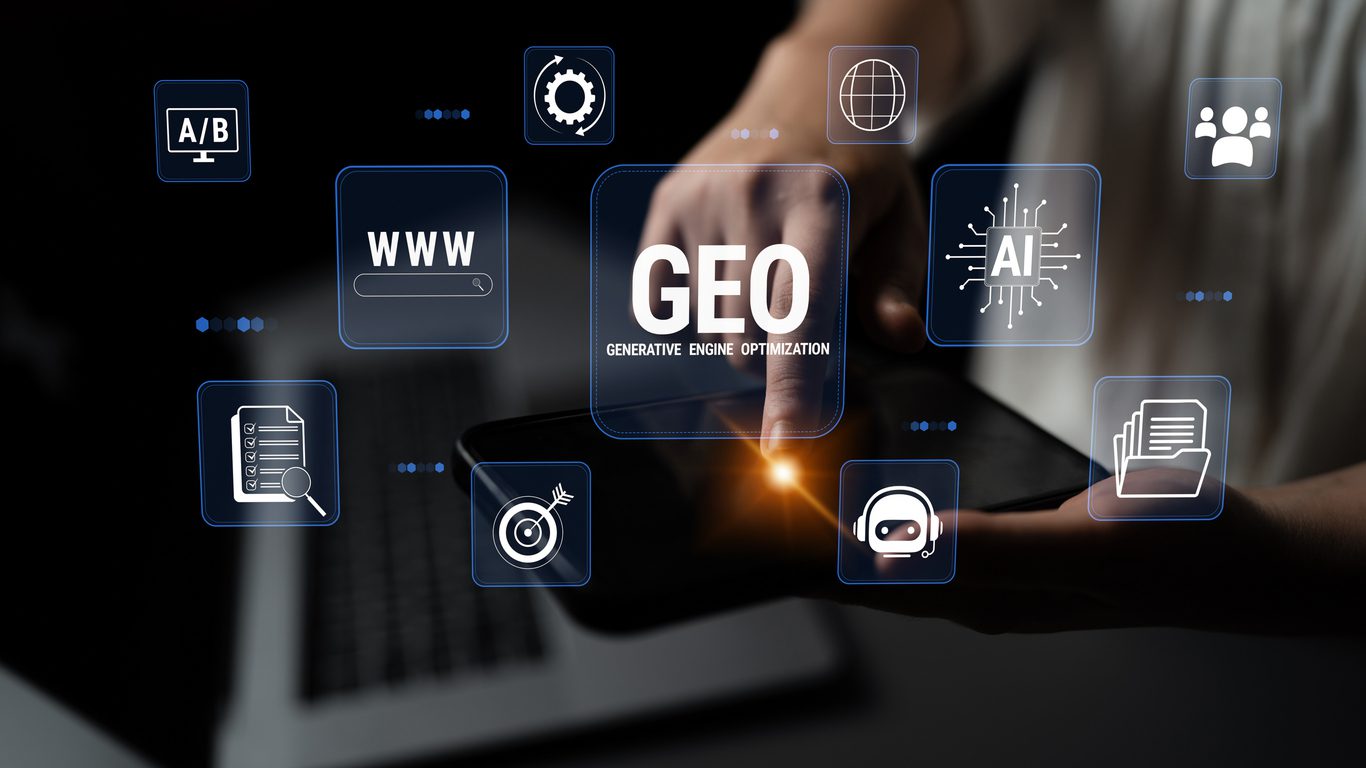
Search engines powered by generative models do not simply index pages—they interpret meaning, connect patterns, and produce synthesized answers. That is why Generative Engine Optimization is now one of the most important capabilities in digital strategy.
What Makes GEO Different From SEO?
A GEO strategy focuses on:
- neural semantic structuring
- intent-rich content formats
- answer-ready paragraphs
- first-party data integration
- RAG-friendly content clusters
- entity-based optimization
- credibility and proof signals
Instead of ranking for positions, the goal is earning citations and inclusion in
AI-generated answers.
Why Digital Marketing Agencies Have Become GEO Partners
A sophisticated digital marketing agency analyzes:
- search intent
- conversation patterns
- RAG citation rules
- AI hallucination risks
- entity relationships
- voice search phrases
- local relevance
By applying these insights, agencies help brands secure their presence in AI-driven search—even when zero-click answer results dominate traditional SERPs.
How RAG, AI Agents, and GEO Work Together
The true power emerges when all three systems operate in sync.
Step 1 – RAG Becomes the Knowledge Engine
Brands feed RAG systems with:
- service pages
- product data
- FAQs
- blog content
- documentation
- reviews
- structured knowledge graphs
This becomes the verified library that AI retrieves from.
Step 2 – AI Agents Monitor and Enhance Multichannel Marketing
Agents evaluate search trends, generate content ideas, detect ranking shifts, identify opportunities across platforms, and distribute messaging across channels.
This transforms a standard team into a multichannel marketing agency with superhuman speed and insight.
Step 3 – GEO Optimizes Content for AI Answer Engines
Agencies then refine content for:
- conversational responses
- entity-level accuracy
- intent-rich snippets
- AI-ready formatting
- answer-first positioning
Together, these three systems give brands sustained visibility in next-gen search ecosystems.
The Role of Multichannel Integration in Next-Gen Search
AI search rewards consistency. A brand that appears credible across multiple environments—web, social, review platforms, video, local listings—earns preferential visibility.
Full-Funnel Multichannel Marketing Reinforces GEO
When combined with GEO principles, multichannel marketing strengthens:
- trust signals
- local authority
- engagement patterns
- content coverage
- relevance across platforms
Digital marketing teams now unify messaging across websites, search engines, AI assistants, streaming platforms, and ecommerce ecosystems to ensure consistent discovery.
Why Digital Brands Need This New Stack
Customers are no longer typing long queries. They are speaking into devices, asking AI agents directly, and expecting instant responses.
To stay relevant, brands must:
- adopt RAG-based content libraries
- deploy AI agents to manage and monitor digital performance
- embrace Generative Engine Optimization
- integrate real-time forecasting
- unify their multichannel presence
This is the formula that ensures discoverability in an AI-first search world.
Expert AI Enablement With Nloop AI
As brands navigate this shift, platforms like
Nloop AI offer a transformative edge. With advanced ingestion models, dynamic RAG pipelines, and intelligent multichannel automation, Nloop AI helps businesses create their own AI-ready ecosystems. From structuring answer-optimized content to deploying forecasting-driven insights, Nloop makes next-gen search visibility achievable for organizations of any size. It empowers marketing teams to scale GEO, automate analysis, and maintain a consistent digital footprint across every major platform—without adding operational overhead.
The New Era of Search Belongs to AI-Optimized Brands
Every digital brand now competes in an environment where AI answers shape customer decisions. RAG, AI agents, and GEO are no longer optional—they are the foundation of modern visibility.
A digital marketing agency that embraces these tools becomes an engine of:
- accuracy
- authority
- visibility
- adaptability
- sustainable traffic growth
If your business wants to stay discoverable, attract ready-to-buy audiences, and future-proof your presence across AI search platforms, the time to modernize your strategy is now.
Ready to elevate your brand for next-gen search? Explore how Nloop AI can accelerate your visibility and transform your digital strategy today.




 Artificial intelligence has completely rewritten the rules of search. Consumers no longer rely solely on traditional search engines—they ask AI assistants, chat interfaces, voice devices, and visual search tools for answers. Digital brands face a new challenge: staying visible in a world where AI chooses what to surface.
This shift has given rise to a powerful new toolkit inside every competitive digital marketing agency: Retrieval-Augmented Generation (RAG), autonomous AI agents, and a new discipline known as Generative Engine Optimization. Together, they help businesses earn visibility in the next frontier of search—AI-powered answer engines.
Below is a deeper look at how advanced agencies build smarter, more adaptive, multichannel strategies using these technologies.
Artificial intelligence has completely rewritten the rules of search. Consumers no longer rely solely on traditional search engines—they ask AI assistants, chat interfaces, voice devices, and visual search tools for answers. Digital brands face a new challenge: staying visible in a world where AI chooses what to surface.
This shift has given rise to a powerful new toolkit inside every competitive digital marketing agency: Retrieval-Augmented Generation (RAG), autonomous AI agents, and a new discipline known as Generative Engine Optimization. Together, they help businesses earn visibility in the next frontier of search—AI-powered answer engines.
Below is a deeper look at how advanced agencies build smarter, more adaptive, multichannel strategies using these technologies.