
Tag: AI in Omnichannel Marketing

  • The Future of Connection: How Omnichannel Marketing Is Redefining Customer Engagement

    The Future of Connection: How Omnichannel Marketing Is Redefining Customer Engagement

    Building a Successful Omni-Channel Marketing Framework

    A New Era of Integrated Marketing

    In today’s digital landscape, consumers don’t experience brands in silos—and neither should your marketing.
    From TikTok videos to Google Ads, from email newsletters to Amazon storefronts, today’s buyer moves fluidly across multiple platforms and devices. Success now depends on your ability to connect every touchpoint into one seamless experience.

    That’s the essence of omnichannel marketing—a strategy that unifies your message, audience data, and brand experience across all channels to meet customers wherever they are, with precision and relevance.

    At nloop.ai/, we’re helping businesses make that vision a reality by fusing artificial intelligence, automation, and real-time data into a cohesive marketing ecosystem. The result? Smarter campaigns, higher engagement, and measurable growth.

    What Is Omnichannel Marketing?

    Omnichannel marketing is the practice of delivering a consistent, connected brand experience across all digital and offline channels—search, social, email, programmatic, streaming, retail, and beyond.

    It’s not about being everywhere. It’s about being everywhere intelligently—with each channel reinforcing the next through shared insights and unified customer data.

    Key pillars of a true omnichannel strategy include:

    • Cross-Channel Consistency: Aligning creative, messaging, and tone across platforms.
    • Data Integration: Merging data from ads, CRM, website, and offline sources into a single view of the customer.
    • Personalization at Scale: Using AI to dynamically tailor messages based on behavior and intent.
    • Continuous Optimization: Learning from every interaction to improve future engagement automatically.

    Whereas multi-channel marketing merely distributes messages across platforms, omnichannel marketing ensures every message is connected, contextual, and coordinated.

    Why Omnichannel Marketing Matters in 2025

    The modern consumer expects a frictionless experience. According to recent research, over 70% of shoppers use more than three channels before making a purchase—and those who engage across multiple touchpoints have a 30% higher lifetime value.

    Yet, most brands still struggle with fragmented tools, disconnected data, and inconsistent creative.
    Omnichannel marketing solves this fragmentation by centralizing insights and automating coordination.

    For example:

    • A potential customer clicks your Google Ad → browses your site → adds an item to their cart but leaves.
    • nloop.ai/’s AI triggers a follow-up email with a tailored offer → retargets them via Connected TV and social ads → syncs that data with your CRM.

    All of it happens automatically, ensuring that every interaction feels personal, timely, and relevant.

    That’s what modern marketing looks like—and it’s powered by AI.

    The Role of AI in Omnichannel Marketing

    Without automation, true omnichannel execution is nearly impossible. The complexity of real-time decision-making across hundreds of audience segments, platforms, and creatives requires intelligence at scale.

    That’s where nloop.ai/ transforms the game.

    1. Predictive Targeting and AI Segmentation

    nloop’s machine learning models analyze behavioral, demographic, and contextual signals to predict what your audience will do next. Instead of static personas, AI continuously refines segments based on live data—helping marketers stay two steps ahead of the customer journey.

    2. Dynamic Content Personalization

    AI dynamically adjusts headlines, visuals, and CTAs across platforms in real time. That means your Facebook ad, email, and CTV creative all adapt automatically to the same user’s current mindset—without the need for manual intervention.

    3. Real-Time Optimization

    Our system evaluates thousands of campaign variables simultaneously—budget, time of day, audience saturation, and channel performance—to auto-allocate spend where it’s most likely to convert.

    4. Unified Attribution

    AI stitches together engagement data across all touchpoints, helping marketers understand which channels actually drive revenue, not just clicks. That means no more guessing where your marketing dollars are working hardest.

    AI doesn’t replace creativity—it amplifies it. It turns marketing from reactive to predictive, enabling brands to connect authentically and profitably across every channel.

    Building a Successful Omnichannel Marketing Framework

    Step 1: Centralize Your Data

    The foundation of omnichannel success is a unified data infrastructure. Integrate analytics from Google, Meta, Amazon, CRM systems, and offline sales into one central dashboard.
    nloop.ai/ connects these silos into a single data loop—hence the name “nloop”—to provide a 360-degree customer view.

    Step 2: Map the Customer Journey

    Identify the key touchpoints from awareness to purchase. Understand where customers start (search, social, streaming) and how they move across channels.
    This insight allows you to tailor creative sequencing—what message they see first, second, and last.

    Step 3: Automate for Speed and Scale

    Automation allows marketers to focus on strategy instead of spreadsheets. From email nurturing to programmatic bidding, automation ensures campaigns run continuously and efficiently.

    Step 4: Personalize Every Interaction

    Leverage AI-powered decision engines to personalize ad messaging, timing, and placement based on real-time user behavior.
    For example, if a user engages with a video ad, nloop.ai/ can automatically trigger a follow-up offer on their preferred channel.

    Step 5: Measure and Optimize Holistically

    Omnichannel marketing thrives on measurement. By unifying attribution models, you can identify which combinations of channels drive conversions—not just last-click performance.

    Omnichannel in Action: A Real-World Scenario

    Imagine a national retail brand using nloop.ai/’s omnichannel engine.

    1. Awareness Stage:
      The campaign begins with video and Connected TV ads introducing the brand message.
    2. Consideration Stage:
      Users who watched 50% or more of the video are retargeted with display and social ads showcasing specific product benefits.
    3. Decision Stage:
      Those who visit the website receive personalized email and SMS follow-ups. AI optimizes send times based on user behavior.
    4. Loyalty Stage:
      Post-purchase customers are nurtured with exclusive offers and community content, automatically synced to CRM and ad platforms.

    Each step reinforces the last, creating a continuous marketing “loop” that drives conversions and builds lifetime value.

    Common Pitfalls in Omnichannel Marketing

    Even well-intentioned marketers can fall short when execution lacks alignment.
    Here are some of the most common pitfalls we see—and how to avoid them:

    • Data Fragmentation: Disconnected tools make it impossible to create a unified view of the customer.
      Solution: Centralize analytics through nloop’s integration hub.
    • Message Inconsistency: Different teams are creating disconnected campaigns across channels.
      Solution: Establish creative alignment and shared asset libraries.
    • Over-Automation: Relying on automation without oversight can erode authenticity.
      Solution: Keep human oversight for tone, emotion, and storytelling.
    • Neglecting Post-Purchase Experience: Many campaigns stop after the sale.
      Solution: Build retention workflows and loyalty triggers into your omnichannel plan.

    Success lies in balancing automation with authenticity, and analytics with empathy.

    The ROI of Going Omnichannel

    Brands that master omnichannel marketing typically see:

    • 20–40% higher customer retention rates
    • Up to 30% more efficient ad spend through intelligent cross-channel allocation
    • 3–5x growth in engagement rates across digital touchpoints
    • Improved attribution accuracy, enabling smarter reinvestment

    These results aren’t magic—they’re measurable. They happen when every platform, message, and data point operates in a unified loop.

    The Future of Omnichannel Marketing: Intelligent Connection

    As we move deeper into 2025, the lines between channels will continue to blur. Voice search, AI agents, and smart devices are already shaping how customers discover and purchase products.

    The brands that win will be those that build systems, not silos—powered by AI, personalization, and continuous learning.

    nloop.ai/ sits at the center of that evolution, helping businesses close the loop between data, creativity, and performance. Our mission is to make omnichannel marketing effortless, measurable, and intelligent.

    Because the future of marketing isn’t about being everywhere—it’s about being everywhere, together.

  • How Generative Engine Optimization Supports AI Search Ranking in Voice, Chat, and Visual Interfaces

    How Generative Engine Optimization Supports AI Search Ranking in Voice, Chat, and Visual Interfaces

    Generative Engine Optimization Supports AI Search Ranking

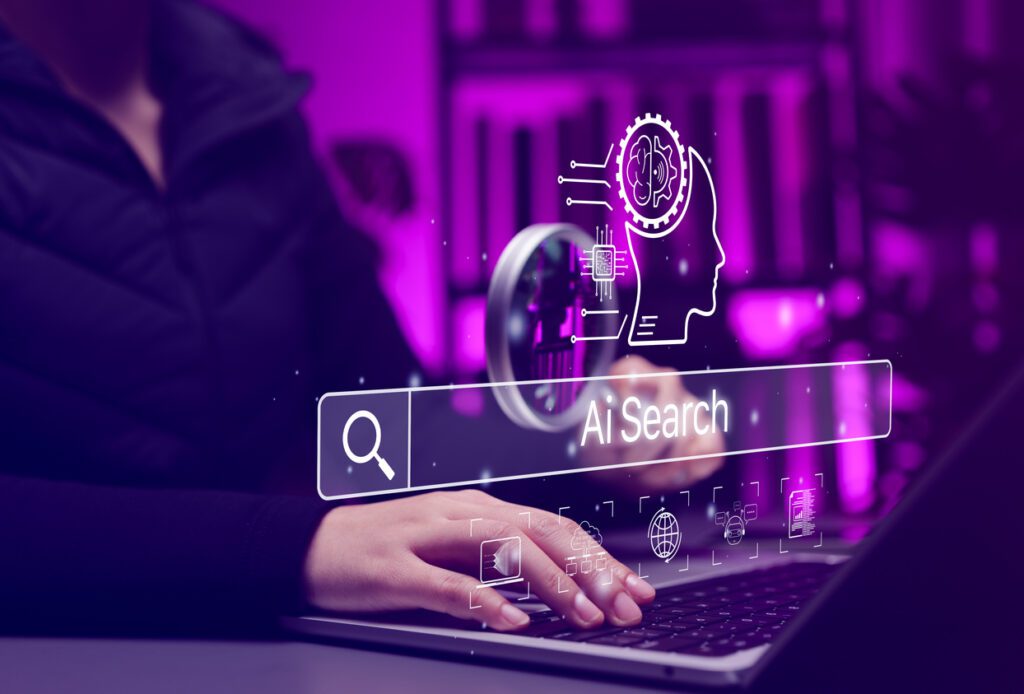
    Artificial intelligence has reshaped how people search, discover, and interact with brands. Search is no longer a single text box with ten blue links. Today’s users speak into microphones, ask questions directly inside chat interfaces, and explore information visually through AI-generated summaries, image-based results, and conversational responses. In this new era, brands aren’t just competing for a spot on a traditional SERP—they’re competing to be included in AI-crafted answers. This shift has given rise to a crucial strategy: Generative Engine Optimization.

    Brands that adapt to this reality early gain a measurable edge. Those who ignore it risk becoming invisible as AI-generated search experiences take center stage. This article breaks down how Generative Engine Optimization strengthens visibility across voice search, chat-based interfaces, and visual AI search experiences—while connecting seamlessly with omnichannel marketing and multichannel marketing strategies.

    Why Generative Engine Optimization Matters in an AI-Driven Search World

    Digital search behavior has become fragmented across multiple platforms and devices. People now expect fast, context-aware responses no matter how they choose to search. Generative Engine Optimization ensures your brand is both discoverable and favored by AI systems, generating the answers.

    Rather than ranking webpages alone, AI engines analyze structured content, entity relationships, factual accuracy, semantic depth, and relevance to user intent. Generative Engine Optimization ensures your content is prepared for these new ranking signals.

    As voice assistants, predictive chatbots, and visual search tools rely more on AI models than simple keyword matching, GEO becomes a non-negotiable strategy for maintaining visibility.

    How Generative Engine Optimization Shapes Voice Search Rankings

    AI Search Behavior Is Different for Voice Interfaces

    Voice search demands that answers be short, factual, and conversational. When a user asks, “What’s the best way to repair a cracked tile?” a voice assistant doesn’t list websites—it chooses one answer.

    Generative Engine Optimization prepares your content for these scenarios by ensuring:

    • Clear, answer-first responses
    • Conversational phrasing
    • Structured and scannable content
    • Strong alignment with intent based on context

    Because voice search relies heavily on AI language models, not just traditional algorithms, GEO increases your chance of being selected as the default spoken response.

    Voice Search Requires Precision and Authority

    A voice assistant must trust the data it gives users. This is where GEO aligns with omnichannel marketing efforts. Voice algorithms look for:

    • Verified brand information
    • Accurate service descriptions
    • Consistent NAP data
    • Expertise and authority indicators across channels

    By integrating Generative Engine Optimization with your broader omnichannel marketing approach, your brand becomes a stronger candidate for authoritative voice-based responses.

    How Generative Engine Optimization Improves Visibility in Chat-Based Answer Engines

    AI Chat Interfaces Favor Structured, Intent-Driven Content

    Chat-based search interactions have surged through tools like ChatGPT, Perplexity, SearchGPT, and Gemini. Users type nuanced questions, and the AI synthesizes information across the web.

    Generative Engine Optimization ensures your content:

    • Directly answers long-form questions
    • Provides contextual depth
    • Includes structured data that the AI can easily extract
    • Maintains clarity and factual consistency

    This makes your content more likely to be cited or referenced within AI-generated answers.

    Why Multichannel Marketing Strengthens GEO for Chat-Based Search

    Chat interfaces examine cross-platform signals to evaluate brand legitimacy. This is where multichannel marketing strategies support your GEO efforts.

    Through optimized messaging across social channels, blogs, videos, and email newsletters, a multichannel marketing agency strengthens your brand signals. As these signals become more consistent, AI engines feel more confident referencing your content.

    Unified messaging reinforces to AI systems that your brand is trustworthy, relevant, and contextually aligned across platforms.

    Generative Engine Optimization and Visual AI Search

    Visual Search Is Becoming a Standard User Behavior

    Visual search tools such as Google Lens, Pinterest Lens, and emerging generative visual engines are expanding rapidly. They allow users to:

    • Upload or scan images
    • Identify products and services
    • Find similar items
    • Receive AI-generated visual suggestions

    Generative Engine Optimization helps brands optimize visual relevance by:

    • Structuring metadata properly
    • Using descriptive alt tags
    • Ensuring visual-text alignment
    • Presenting content in a format that AI can interpret semantically

    This ensures AI understands what your visual assets represent and when to surface them.

    Visual AI Depends on Consistency Across Channels

    Visual AI tools correlate images with associated text, brand names, and contextual data. This is where omnichannel marketing becomes crucial. When your brand has consistent messaging, tone, descriptions, and visuals across channels, AI engines understand the relationships more clearly.

    An omnichannel marketing agency can help you shape this consistency, boosting your GEO effectiveness for image-based ranking systems.

    The Relationship Between GEO, Omnichannel Marketing, and Multichannel Marketing

    GEO Is Not a Standalone Strategy—It’s Part of an Ecosystem

    Generative Engine Optimization works best when supported by strong brand consistency across all customer touchpoints. This is where omnichannel marketing and multichannel marketing play an invaluable role.

    By aligning GEO with omnichannel marketing:

    • Your brand narrative becomes more unified
    • AI engines can map relationships more accurately
    • Voice, chat, and visual interfaces receive consistent signals

    By integrating GEO with multichannel marketing:

    • Your content reaches audiences across multiple touchpoints
    • AI engines reinforce brand authority across diverse sources
    • Contextual signals become stronger and more interconnected

    Both strategies complement the core purpose of GEO—helping AI systems understand your brand, your expertise, and your relevance across all forms of search.

    Practical Ways to Apply Generative Engine Optimization Across Interfaces

    For Voice Assistants

    • Use conversational phrasing
    • Start sections with answer-first summaries
    • Optimize content for people who ask questions verbally
    • Include structured data wherever possible

    For Chat-Based Search

    • Add long-form, intent-rich FAQs
    • Build topical clusters instead of isolated articles
    • Write content that answers “implied questions”
    • Include citations, facts, and data that AI engines can rely on

    For Visual AI Search

    • Add detailed alt text to every image
    • Use descriptive filenames
    • Provide the surrounding textual context
    • Ensure visual and written content match meaningfully

    By implementing these strategies together, your brand becomes optimized for all AI-powered interfaces.

    How an Omnichannel Marketing Agency Helps Strengthen GEO

    A skilled omnichannel marketing agency ensures your messaging stays consistent across platforms—web, social, email, SMS, and mobile apps. This consistency is crucial because AI engines rely on cross-channel validation to confirm a brand’s credibility and trustworthiness.

    Such agencies help you unify:

    • Brand tone
    • Product language
    • Data accuracy
    • Customer experience across touchpoints

    This unified alignment amplifies the impact of Generative Engine Optimization across multiple AI-powered search environments.

    Multichannel Marketing Agency Benefits for GEO Readiness

    A strong multichannel marketing agency helps diversify your digital footprint and ensure your content reaches users at multiple points. AI engines favor brands with broad visibility across platforms because it signals relevance and authority.

    A multichannel partner helps you:

    • Develop platform-specific content
    • Maintain cross-platform consistency
    • Improve audience engagement signals
    • Strengthen your digital presence for GEO-powered search

    Together, these efforts increase the likelihood that AI engines pull your brand into conversational, visual, and voice-based responses.

    Nloop AI: A New Advantage for Brands Preparing for GEO

    Forward-thinking businesses are turning to AI-powered platforms to automate, scale, and refine their search presence. Nloop AI stands out because it doesn’t simply produce content—it intelligently reads search environments, identifies ranking opportunities, analyzes competitor signals, and improves your optimization based on real-time search behavior.

    Nloop AI helps you adapt to fast-evolving AI search ecosystems, providing streamlined GEO insights and automated content workflows that boost visibility across voice, chat, and visual search formats. It serves as a powerful advantage for brands aiming to stay relevant as AI-generated search experiences dominate the way people find information.

    Elevate Your Brand with Generative Engine Optimization

    Generative Engine Optimization is no longer optional—it’s the foundation of modern search visibility. As AI transforms voice queries, chat-based search tools, and visual interfaces into the new gateways for discovery, your brand needs a strategy built for the next generation of search.

    GEO brings structure, clarity, and authority to your digital presence while pairing seamlessly with omnichannel marketing and multichannel marketing strategies. When these systems work together, AI engines are far more likely to select your brand as the answer.

    If you’re ready to future-proof your visibility and outperform competitors in AI-powered search, now is the time to act. Build your GEO strategy, strengthen your content ecosystem, and integrate the right AI-driven tools to stay ahead.

    Start today—your future search visibility depends on it.

×