
Author: SEO Team

  • Choosing the Best Omnichannel Marketing Platform for Smarter Campaign Management

    Choosing the Best Omnichannel Marketing Platform for Smarter Campaign Management

    Omnichannel Marketing Platform

    Why Businesses Need Better Omnichannel Systems

    Customers no longer interact with brands through a single channel. A buyer may discover a product on social media, research it through Google, sign up through email, and later make a purchase after seeing a retargeting ad. If those touchpoints feel disconnected, businesses lose engagement and trust.

    This is why choosing the right omnichannel marketing platform has become critical. Businesses need systems that connect communication, customer data, and campaign management into one organized experience.

    What Makes an Omnichannel Marketing Platform Important?

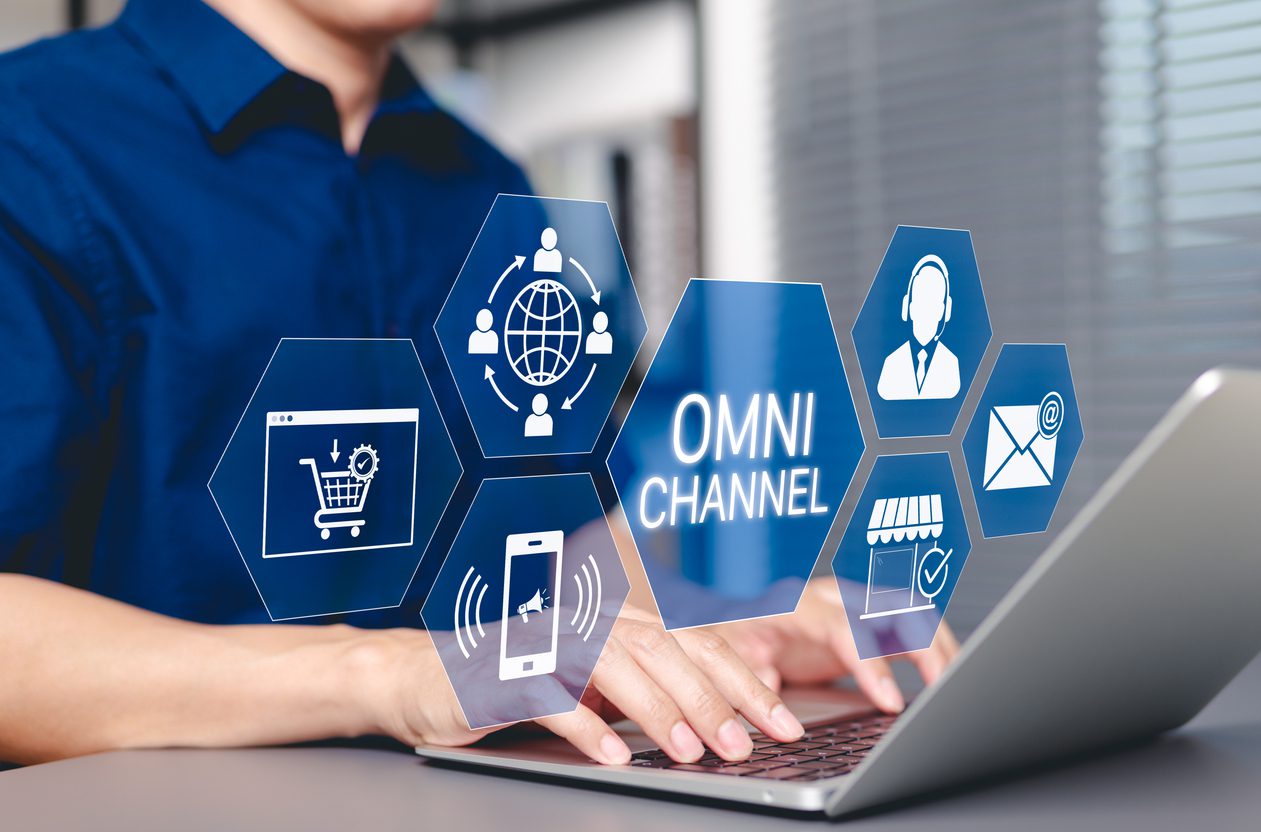
    An omnichannel marketing platform helps businesses manage customer communication across multiple channels from one centralized system.

    These platforms typically connect:

    • Email campaigns
    • Social media
    • SMS marketing
    • Paid advertising
    • CRM systems
    • Analytics and reporting
    • Customer support interactions

    The goal is not simply to run campaigns everywhere. The goal is to create a consistent customer experience across every touchpoint.

    Why Omnichannel Marketing Is Growing So Quickly

    Modern omnichannel marketing is driven by changing customer expectations. Consumers want businesses to remember preferences, maintain context, and respond quickly.

    Businesses benefit because omnichannel systems help:

    • Improve customer experience
    • Increase campaign efficiency
    • Strengthen customer retention
    • Reduce communication gaps
    • Create more personalized marketing

    Companies that fail to unify their messaging often struggle with fragmented customer journeys.

    Features Businesses Should Look For

    Not every platform is designed for long-term growth. Businesses should choose systems that support scalability, automation, and strong reporting.

    Important features include:

    Centralized customer data

    All customer interactions should be visible in one place.

    Multi-channel campaign management

    Businesses should manage email, social, SMS, and advertising together.

    Workflow automation

    Automated sequences reduce manual effort and improve response times.

    Analytics and attribution

    Detailed reporting helps businesses understand what drives engagement and conversions.

    AI-supported optimization

    Modern platforms increasingly use predictive insights and automation.

    Omnichannel Forecasting Helps Businesses Plan Smarter

    One major advantage of modern systems is omnichannel forecasting. Businesses can use data from multiple channels to predict customer behavior and improve decision-making.

    Forecasting can help businesses:

    • Predict customer demand
    • Improve campaign timing
    • Allocate budgets more effectively
    • Identify high-performing channels
    • Reduce wasted ad spend

    This gives businesses more control over future growth strategies.

    How an Omnichannel Marketing Strategy Improves Performance

    A strong omnichannel marketing strategy focuses on consistency and customer experience instead of isolated campaigns.

    Successful strategies usually include:

    • Consistent brand messaging
    • Personalized customer journeys
    • Coordinated communication across channels
    • Audience segmentation
    • Automated follow-up systems

    Businesses that align all communication channels often see stronger engagement and customer loyalty.

    Why Businesses Work With an Omnichannel Marketing Agency

    Managing multiple platforms internally can become difficult as campaigns scale. Many businesses work with an omnichannel marketing agency to simplify execution and improve performance.

    Agencies can help with:

    • Cross-channel campaign management
    • Automation setup
    • Data analysis
    • Audience targeting
    • Conversion optimization
    • Performance reporting

    An experienced agency can often identify inefficiencies that businesses may overlook internally.

    The Role of a Digital Marketing Company in Omnichannel Growth

    A modern digital marketing company does more than run ads or send emails. It helps businesses create connected systems that improve long-term customer engagement.

    Strong digital marketing partners focus on:

    • Customer journey optimization
    • Brand consistency
    • Data-driven decision making
    • Marketing automation
    • Conversion-focused campaign structure

    This broader approach helps businesses scale more efficiently.

    Common Problems Businesses Face Without Integration

    Businesses that use disconnected systems often encounter operational problems.

    Common issues include:

    • Inconsistent messaging
    • Duplicate customer communication
    • Poor lead tracking
    • Incomplete reporting
    • Delayed follow-ups
    • Fragmented customer experiences

    These problems reduce efficiency and weaken customer trust over time.

    How Nloop AI Helps Simplify Omnichannel Campaign Management

    Nloop AI helps businesses organize complex campaign management by centralizing automation, reporting, and performance insights into one system. Instead of relying on disconnected tools, businesses can track customer engagement, monitor campaigns, and improve forecasting from a unified platform. This allows teams to reduce inefficiencies, make faster decisions, and create more consistent customer experiences across channels.

    How Businesses Can Choose the Right Platform

    The best platform depends on business goals, audience size, and operational complexity.

    Businesses should evaluate:

    • Ease of integration
    • Reporting capabilities
    • Automation flexibility
    • Scalability
    • Customer support
    • AI and forecasting features
    • Multi-channel support

    Choosing the wrong platform can create unnecessary complexity and slow growth.

    The Future of Omnichannel Marketing Platforms

    Marketing platforms are evolving quickly as AI and automation become more advanced.

    Future trends include:

    • Predictive customer journey analysis
    • AI-assisted campaign optimization
    • More advanced personalization
    • Unified customer identity tracking
    • Real-time omnichannel forecasting

    Businesses that adopt smarter systems early will likely gain stronger long-term advantages.

    Frequently Asked Questions

    What is an omnichannel marketing platform?

    An omnichannel marketing platform helps businesses manage customer communication and campaigns across multiple channels from one centralized system.

    Why is omnichannel marketing important?

    Omnichannel marketing creates a more consistent customer experience across digital and offline touchpoints.

    What is omnichannel forecasting?

    Omnichannel forecasting uses data from multiple channels to predict customer behavior, campaign performance, and future trends.

    Why work with an omnichannel marketing agency?

    An agency can help businesses manage campaigns more efficiently and improve cross-channel strategy.

    How does a digital marketing company support omnichannel campaigns?

    A digital marketing company helps businesses integrate platforms, automate workflows, and improve customer engagement.

    Better Systems Create Better Customer Experiences

    Customers expect smooth, connected experiences regardless of where they interact with a brand. Businesses that rely on disconnected marketing systems often struggle to meet those expectations.

    By investing in the right omnichannel marketing platform, businesses can improve communication, simplify campaign management, and create stronger customer relationships.

    Ready to streamline your omnichannel strategy? Start building a smarter, more connected marketing system with support from Nloop AI today.
  • Organic Search Has Changed. Here’s What’s Actually Happening — and What to Do About It

    Organic Search Has Changed. Here’s What’s Actually Happening — and What to Do About It

    Generative Engines Are Reshaping Organic Search

    Picture this: a potential customer asks an AI assistant which software platform best fits their workflow. The tool responds with a confident, detailed answer — and your competitor’s name is in it. Yours isn’t. That customer never opens a browser tab. That’s not a hypothetical. That’s Tuesday.

    The rise of generative search engines has quietly restructured what it means to be “findable” online. And for brands still optimizing purely for click-through rates and keyword rankings, the gap between where they are and where they need to be is widening fast.

    What Generative Engines Are Actually Doing to Organic Traffic

    Generative search doesn’t work like traditional search. Instead of surfacing ten links and letting users decide, it synthesizes information from multiple sources and delivers a single, consolidated answer. The user gets what they need without ever scrolling through results.

    This creates a structural shift in organic traffic. Pages that once thrived on informational queries — “what is,” “how to,” “best way to” — are seeing reduced click volumes even when they rank well, because the AI has already answered the question above the fold.

    The businesses that understand this aren’t panicking. They’re pivoting toward generative engine optimization, the discipline of making your brand the source AI tools pull from, reference, and name.

    AI Brand Mentions: The New Currency of Digital Visibility

    In traditional SEO, a backlink from an authoritative site was gold. In the GEO era, an AI brand mention — your company name appearing in a generated AI response — carries comparable weight, but it’s earned differently.

    AI models reference brands they associate with credibility, consistency, and topical authority. That association is built through:

    • Volume and quality of third-party mentions — press coverage, analyst write-ups, industry roundups, podcast appearances
    • Clarity of positioning — brands that own a specific niche are cited more predictably than those with broad, vague messaging
    • Content that answers real questions — not just optimized content, but genuinely useful content that a model can summarize accurately

    This is where PR strategies and media management become SEO tools in a way they never quite were before. A well-placed feature in a trade publication doesn’t just build reputation anymore — it contributes directly to whether an AI system recognizes your brand as authoritative in a given category.

    Integrating GEO Into Your Brand Strategy

    Generative engine optimization brands integration isn’t a separate workstream bolted onto your existing marketing. Done right, it runs through everything — your content, your PR outreach, your social presence, your product descriptions.

    Here’s what that integration looks like in practice:

    • Align your messaging across every channel. AI models build brand associations from patterns. Inconsistent positioning across your website, press mentions, and social profiles creates a blurry picture. Consistent, specific messaging creates a sharp one.
    • Publish content that earns citations. Original research, named data points, and proprietary frameworks are the content types AI tools reference most reliably. A statistic you generated is more citable than one you borrowed.
    • Use PR offensively. Media placements in publications that AI models treat as credible sources aren’t just brand awareness plays — they’re GEO infrastructure. A strategic mention in the right outlet can do more for your AI visibility than a hundred optimized blog posts.
    • Structure every page for extraction. Headers, bullet points, defined terms, clear summaries — these aren’t just readability features. They’re the structural signals that make your content easy for a generative model to parse, summarize, and cite.

    Measuring Success and ROI in Generative Engine Optimization

    One of the honest challenges facing brands right now is that the metrics for measuring success and ROI in generative engine optimization are still evolving. Traditional dashboards don’t capture AI citations. You can rank first on Google and still be invisible to the user who asked Perplexity.

    Emerging measurement approaches worth tracking:

    • AI citation monitoring — tools that track whether and how often your brand appears in AI-generated responses
    • Brand query volume trends — if GEO efforts are working, branded search volume often rises as AI mentions drive awareness
    • Traffic source analysis — a decline in informational query traffic alongside stable or growing conversion traffic can signal that AI is handling top-of-funnel while your site handles consideration and decision stages
    • Share of voice in AI responses — how often your brand appears versus competitors when users ask AI tools about your category

    The generative engine optimization companies building measurement frameworks now will have a significant advantage as the space matures.

    How Nloop AI Helps Brands Navigate This Shift

    For businesses that want to move from confusion to clarity on this, Nloop AI offers something the market genuinely needs: a practical, performance-focused approach to the new visibility landscape. Rather than retrofitting old SEO tactics, Nloop AI builds generative engine optimization strategies from the ground up — combining content architecture, brand authority development, and AI-informed analytics to ensure your business earns the citations and mentions that drive real growth. Think of it less as an agency relationship and more as a competitive intelligence upgrade for your entire digital presence.

    FAQ: Generative Engines and Organic Search

    Do generative engines replace Google?

    Not entirely — but they’re changing user behavior significantly. Many informational queries are now resolved in AI tools before a Google search happens.

    How do I know if my brand is being cited by AI?

    Specialized AI monitoring tools can track mentions in generative responses. Manual testing — querying AI tools with category-relevant questions — is a useful starting point.

    Is generative engine optimization only for large brands?

    No. Niche brands with deep topical authority are frequently cited ahead of larger, broader competitors. Specificity is an advantage in GEO.

    How do PR and media management connect to GEO?

    Publications that AI models treat as credible sources pass authority to the brands they mention. Strategic media placements are now a direct input to AI visibility.

    The Window for Early Advantage Is Open — But Not Forever

    The brands appearing in AI-generated answers six months from now are building that presence today. Connect with Nloop AI to develop a generative engine optimization strategy that turns your content, PR, and brand authority into compounding visibility — before your competitors do.

  • Your Brand Might Be Invisible to AI — Here’s How to Find Out

    Your Brand Might Be Invisible to AI — Here’s How to Find Out

    AI brand mentions

    Most marketing dashboards track impressions, clicks, and conversions. None of them tells you whether an AI assistant mentioned your brand this week when someone asked for a recommendation in your category.

    That’s a blind spot that’s growing more expensive every month.

    As AI-powered tools become the first stop for product research, service comparisons, and vendor discovery, how to measure company presence in generative engine recommendations has gone from a niche technical question to a core business concern. The challenge is that most businesses don’t have a system for it yet — and the ones building one now are pulling ahead fast.

    Why Measurement in GEO Is Different From Traditional Analytics

    Standard analytics tell you what happened after a user arrived at your site. Generative engine optimization measurement tells you something earlier and more fundamental: whether your brand is even in the conversation that leads users to make a decision.

    A user who asks an AI tool “Which project management platforms are best for creative agencies?” and receives a response that doesn’t include your brand may never visit your site, run a direct search, or see your ads. The gap happens upstream — before any tracking pixel fires.

    This is why measuring success and ROI in generative engine optimization requires a different framework entirely. You’re not measuring what happens on your website. You’re measuring how visible your brand is inside AI-generated answers.

    How to Actually Track AI Brand Mentions

    AI brand mentions are the clearest signal of GEO performance, but they require intentional monitoring. Here’s a practical approach:

    Manual query testing is the starting point. Build a list of 20–40 questions your target customers are likely to ask AI tools — phrased conversationally, the way real people type. Run those queries weekly across ChatGPT, Perplexity, Google AI Overviews, and any other AI tool your audience uses. Note when your brand appears, what context surrounds the mention, and which competitors are named instead.

    Tracking branded search volume trends is an indirect but useful signal. When AI tools mention your brand in responses, some users follow up with a direct search to learn more. A rising trend in branded queries — even as overall traffic sources shift — can indicate growing AI-driven awareness.

    Share of voice in AI responses is the metric that matters most. When you query tools about your category, how often does your name appear versus competitors? Over a rolling 90-day period, that ratio tells you whether your GEO efforts are gaining or losing ground.

    Third-party monitoring tools are emerging specifically for this space. Platforms designed to track AI citation frequency are developing quickly — connecting these to your broader brand awareness metrics creates a more complete picture of AI-era visibility.

    Measuring ROI: Connecting AI Visibility to Business Outcomes

    Measuring success and ROI in generative engine optimization is partly quantitative and partly about leading indicators. The direct attribution chain — AI mentions to site visit to revenue — is still developing as tools evolve. But these proxy signals are meaningful right now:

    • Inbound lead source shifts — Are more qualified leads coming in who already know your brand name, your positioning, and your differentiation without having clicked a traditional ad? That often signals AI-driven awareness.
    • Sales cycle compression — Prospects who found you through AI recommendations tend to arrive better informed. If your sales team reports shorter discovery phases, AI visibility may be contributing.
    • Branded query growth — Month-over-month increases in direct brand searches, independent of paid campaign activity, frequently correlate with growing AI citation volume.
    • Content citation patterns — Which specific pages or pieces of content are being referenced in AI responses? These pages deserve ongoing investment and freshness.

    Generative Engine Optimization Brands Integration: Making Measurement Systematic

    The businesses that measure best are the ones that have built generative engine optimization brands integration into their existing marketing operations — not as a standalone experiment, but as a structured pillar of how they track presence and authority.

    Practically, this means:

    • Adding AI query testing to weekly or monthly marketing reviews
    • Including AI mention frequency alongside traditional brand awareness metrics in reporting
    • Tagging content by topic cluster and tracking which clusters earn the most AI citations
    • Creating feedback loops between GEO measurement findings and content strategy — so the insights from monitoring directly inform what you publish next

    Generative Engine Optimization companies that take this integrated approach consistently outperform those treating GEO as an ad hoc experiment. Measurement turns visibility from a guess into a managed, improvable outcome.

    How Nloop AI Brings Precision to a Process Most Businesses Are Still Figuring Out

    For marketing teams that want to move from manually testing AI queries in a spreadsheet to having a real competitive intelligence system, Nloop AI offers a distinct advantage. Built specifically for the demands of AI-era brand growth, Nloop AI combines generative engine optimization strategy with the kind of measurement infrastructure that turns “we think we’re showing up more” into documented, reportable progress. It’s the difference between watching a dashboard and actually understanding what drives the numbers — with a team that keeps the methodology sharp as AI tools themselves continue to evolve.

    FAQ: Measuring Brand Presence in Generative Engine Recommendations

    What is generative engine optimization?

    GEO is the process of optimizing your brand’s content and authority so AI-powered search tools cite, reference, and recommend your business in their generated responses.

    How do I know if my brand is being mentioned by AI tools?

    Manual query testing — running category-relevant questions through tools like ChatGPT and Perplexity — is the most direct approach. Specialized AI monitoring platforms are also emerging to automate this tracking.

    What’s the best ROI metric for GEO?

    Currently, the most useful signals are AI mention frequency, branded search volume trends, qualified lead source quality, and sales cycle length changes. Direct attribution is still maturing.

    How often should I test my brand’s AI visibility?

    Weekly testing with a consistent query set gives the most useful trend data. Monthly is sufficient for businesses in lower-competition categories.

    Do AI brand mentions actually drive business results?

    Evidence from emerging GEO case studies suggests yes — primarily through increased brand awareness, faster sales cycles with better-informed prospects, and growing branded search volume driven by AI-prompted discovery.

    Start Measuring Before Your Competitors Build the Lead

    The businesses with the clearest view of their AI presence right now will be the ones making the smartest content and positioning decisions six months from now. That compounding advantage starts with measurement.

    Connect with Nloop AI today and build the generative engine optimization measurement system your brand needs to compete — and win — in the AI-driven search landscape.

  • Why Buying Display Ads Manually Is Costing You More Than You Realize

    Why Buying Display Ads Manually Is Costing You More Than You Realize

    Programmatic Display Marketing

    Every digital marketer has placed a display ad the old way — negotiate placement, agree on pricing, upload a creative, and hope the audience you were sold on actually shows up. Sometimes it works. Often, you’re paying premium rates to reach people who were never going to convert, on inventory that sounded better in the pitch than it performed in reality.

    Programmatic display marketing replaces that guesswork with data-driven precision. Instead of buying placements, you’re buying audiences — and the system finds them wherever they are across the web in real time, at the most efficient price available.

    The difference in results between brands that have made this shift and those still running manual placements is becoming harder to ignore.

    What Display Programmatic Advertising Actually Means

    Breaking Down the Mechanics

    Display programmatic advertising is the automated buying and selling of digital ad inventory through real-time bidding systems. When a user loads a webpage, an auction happens in milliseconds — advertisers bid for the right to show that specific user an ad, based on who that user is rather than where they’re browsing.

    The process involves three key components working together:

    • Demand-Side Platforms (DSPs) — the tools advertisers use to set targeting parameters, budgets, and bid strategies
    • Supply-Side Platforms (SSPs) — the tools publishers use to make their inventory available to buyers
    • Ad Exchanges — the marketplaces where DSPs and SSPs connect, and auctions are executed in real time

    What makes this powerful is the targeting layer. Programmatic display marketing allows advertisers to reach users based on behavioral data, browsing history, purchase intent signals, demographic profiles, geographic location, and dozens of other variables — all applied simultaneously within a single campaign.

    Audience Targeting in Programmatic Display: Beyond Basic Demographics

    Who You Reach Matters More Than Where You Show Up

    The most common mistake brands make in display programmatic advertising is treating it like a fancier version of buying banner placements. It isn’t. The inventory is almost secondary — what matters is the audience data layered onto it.

    Effective programmatic targeting strategies include:

    Contextual targeting with audience overlay. Matching your ad to relevant content is valuable. Matching it to a user who has already demonstrated relevant interest — through search history, purchase behavior, or content engagement — is dramatically more valuable. Combining both produces the strongest results.

    In-market audience segments. Most programmatic platforms offer pre-built in-market segments: users currently researching products or services in specific categories. For brands selling considered purchases — vehicles, software, financial products, home services — targeting in-market segments compresses the sales cycle significantly.

    Custom intent audiences. Building audiences from specific keyword search histories allows advertisers to reach users who have recently searched terms directly related to your product or service. This brings search intent data into a display environment — capturing high-intent prospects before they’ve found a competitor.

    Sequential messaging. Serving different creatives to the same user based on their stage of engagement — awareness, consideration, decision — is a tactic that manual display buying can’t execute at scale. Programmatic makes it systematic and measurable.

    Franchise Programmatic Display: Managing Multi-Location Complexity

    One Brand, Many Markets, Consistent Execution

    Franchise programmatic display presents a specific operational challenge: maintaining national brand consistency while enabling location-level relevance and budget control. Franchisors need brand-safe creative and message alignment. Franchisees need local targeting and the ability to compete in their specific market.

    Modern programmatic platforms solve this through tiered campaign structures — a national brand layer sets creative guidelines and handles broad awareness, while location-specific campaigns run simultaneously with geo-targeting, local landing pages, and budget control at the individual franchisee level.

    The key metrics that matter most in franchise programmatic campaigns are local store visit attribution, per-location cost per lead, and brand impression share within defined trade areas. These allow franchisors to identify which locations are winning in their markets and which need campaign adjustments — with the granularity that traditional display buying simply doesn’t provide.

    Working With a Programmatic Display Marketing Agency

    What to Look for and What to Ask

    Choosing a programmatic display marketing agency is a different decision from choosing a creative or media agency. The technical depth matters as much as the strategic thinking. Before committing, the questions worth asking are direct:

    • Which DSPs do you access, and do you have direct relationships or are you buying through an intermediary?
    • How do you handle brand safety — what controls prevent ads from appearing next to inappropriate content?
    • What attribution models do you use, and can you connect campaign exposure to actual business outcomes beyond clicks?
    • How granular is your reporting, and how frequently will we see performance data?

    A strong digital marketing company operating in programmatic should be able to answer these questions specifically — not with generalities about scale and reach.

    How Nloop AI Gives Programmatic Advertisers a Measurable Edge

    The technical infrastructure of programmatic is accessible to most marketers. The strategic intelligence to use it well — knowing which audience combinations to test, which creative signals drive performance, and how to optimize bidding strategies as campaigns accumulate data — is where most teams fall short. Nloop AI brings that intelligence layer to programmatic display campaigns, combining machine learning-driven optimization with strategic human oversight to ensure budgets are working harder with every passing day. For brands that want their programmatic investment to produce compounding returns rather than flat performance, Nloop AI operates as the growth partner that closes the gap between potential and outcome.

    FAQ: Programmatic Display Marketing

    What is programmatic display advertising?

    It’s the automated buying of digital display ad inventory through real-time bidding systems, targeting specific audiences based on behavioral and demographic data rather than purchasing fixed placements.

    How is programmatic display different from traditional display advertising?

    Traditional display buys placements — specific websites or ad positions. Programmatic buys audiences — reaching defined users wherever they are across the web, in real time, at auction-determined prices.

    What data is used in programmatic audience targeting?

    A combination of first-party data (your own customer and website visitor data), second-party data (partner data sharing), and third-party data (behavioral, demographic, and in-market segments from data providers).

    Is programmatic display suitable for small businesses?

    Yes. Minimum budgets have dropped significantly, and self-serve platforms make programmatic accessible to businesses of all sizes. The efficiency advantages are actually proportionally greater for smaller budgets, where waste matters more.

    How do I measure success in programmatic display campaigns?

    Beyond clicks and impressions, effective measurement includes view-through conversions, brand lift studies, foot traffic attribution for physical locations, and cross-device attribution connecting display exposure to downstream conversions.

    What is franchise programmatic display?

    A tiered programmatic campaign structure that maintains national brand consistency while enabling location-level targeting, budget control, and performance measurement for individual franchise locations.

    The Inventory Was Always There — It’s the Intelligence That Changes Everything

    Programmatic display marketing has made the entire open web a targetable advertising environment. The brands winning in that environment aren’t simply those with the largest budgets — they’re the ones with the sharpest audience intelligence, the most disciplined creative testing, and the attribution infrastructure to know what’s actually driving results.

    Connect with Nloop AI today and build the programmatic display strategy that puts your brand in front of the right people, at the right moment, with the measurable outcomes your business needs to grow.

×