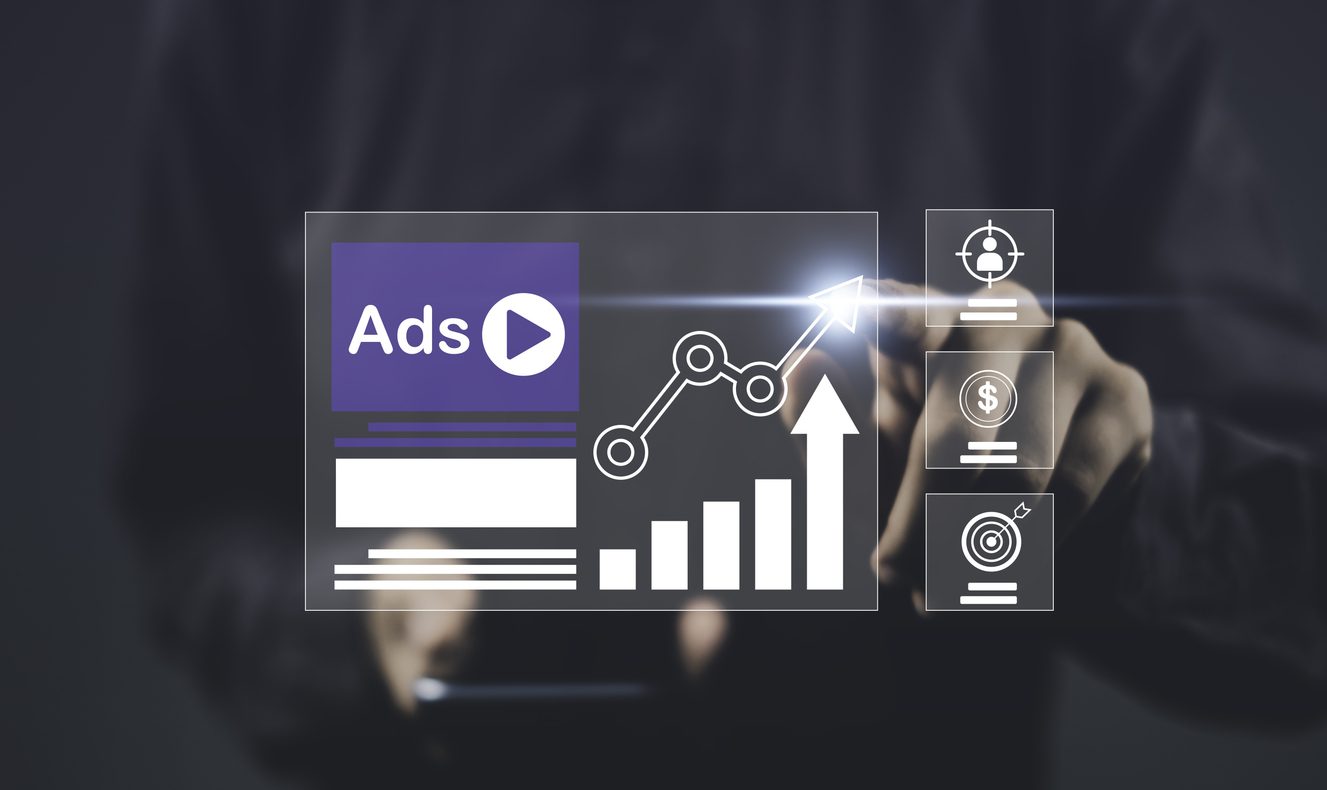





Banner blindness is real. Most people scroll past display ads without a second glance — and advertisers have been paying for those ignored impressions for years. But the brands consistently winning at digital advertising aren’t the ones spending more. They’re the ones targeting better.
That’s exactly what display programmatic advertising is built to fix.
What Is Programmatic Display Advertising — And How Is It Different?
Let’s clear something up first. What is programmatic display advertising, and why does it get lumped in with everything from pop-ups to retargeting pixels?
At its core, programmatic display refers to the automated buying and selling of digital display ad placements — banners, sidebars, native units, and more — through real-time technology rather than manual negotiation. Traditional display meant calling a publisher, agreeing on a rate, and booking a slot weeks in advance. Programmatic eliminates all of that.
Here’s what actually happens in the milliseconds between a page loading and an ad appearing:
- A user lands on a webpage
- An automated auction takes place between competing advertisers
- The winning ad — determined by audience data, bidding logic, and campaign rules — is served instantly
- The advertiser pays only for that specific, targeted impression
The word “programmatic” tends to make people think of complexity. In practice, it means precision — reaching the right person at the right moment without burning budget on audiences that will never buy.
The Real Advantage of Programmatic Display: Data Depth, Not Just Delivery Speed
Most display campaigns underperform not because of the format, but because of who sees them. Running a premium product ad to an audience actively searching for budget alternatives isn’t just ineffective — it’s expensive and ineffective.
Programmatic display flips this by using audience intelligence to drive every placement decision. Rather than buying space on a particular website, you’re effectively buying access to a specific type of person — wherever they happen to be browsing online.
Behavioral Signals Go Beyond Basic Demographics
Age and ZIP code are starting points. Modern programmatic tools layer in browsing patterns, content consumption history, purchase intent signals, and even offline behavioral data — building audience segments that reflect where someone actually is in their decision journey, not just who they are on paper.
Frequency Controls Protect How Your Brand Is Perceived
One of the quietest budget drains in display advertising is overexposure. Showing the same creativity to the same person ten times in a week doesn’t build familiarity — it builds irritation. Programmatic frequency caps handle this automatically, keeping your brand visible without making it unwelcome.
Campaigns Optimize While They Run, Not After
With manual buys, you’d wait days or weeks for performance reports and then adjust. Programmatic campaigns shift in real time — moving budget toward what’s converting and pulling back from what isn’t, without pausing and restarting the campaign.
Why Franchise Programmatic Display Is Its Own Discipline
Franchise brands face a targeting challenge that single-location businesses simply don’t have: they need national brand consistency and hyperlocal relevance at the same time, often across dozens or hundreds of markets.
Franchise programmatic display addresses this directly. It enables campaigns that operate at both scales simultaneously — national creative standards maintained in every market, while location-specific messaging, regional promotions, and local audience targeting run automatically beneath the surface.
What Multi-Location Programmatic Actually Enables
A franchise with 60 locations doesn’t need 60 separately managed campaigns. A well-structured programmatic display setup can serve locally customized ad variants within a single unified campaign, apply geo-targeted audience filters per market, report on performance at both the national and individual-location level, and maintain creative compliance across every office without manual oversight.
For any digital marketing company managing franchise accounts at scale, this kind of architecture isn’t a nice feature — it’s the baseline expectation.
Three Places Display Campaigns Quietly Lose Money
Even with the right tools, display programmatic advertising can underperform when the fundamentals are off. The culprits are usually strategic, not technical.
Scaling mediocre creative: Programmatic can reach millions of impressions with alarming efficiency. If the ad itself isn’t compelling, you’ve simply reached more people with something forgettable. Multiple creative variants, tested against real performance data, prevent this from silently draining results.
Prioritizing cheap CPMs over quality audiences: A low cost-per-thousand sounds great until you realize the audience has no purchase intent. True efficiency means cost-per-qualified-outcome — not cost-per-impression.
Treating the funnel as a single stage: Upper-funnel awareness placements, mid-funnel consideration ads, and lower-funnel retargeting all serve different psychological moments in a buyer’s journey. Collapsing them into one undifferentiated campaign flattens results across the board.
How Nloop AI Reshapes What Programmatic Can Do
Nloop AI approaches display programmatic advertising the way a strategic growth partner would — not as a media delivery mechanism, but as a connected system for reaching your most valuable audiences with precision.
Nloop AI’s platform combines intelligent audience modeling, adaptive bidding logic, and multi-signal campaign optimization to ensure your programmatic display spend does real business work. Whether you’re scaling a franchise network, building brand awareness in a crowded category, or pushing a product launch to a high-intent audience, Nloop AI identifies where those people are and gets your message in front of them at the moments that matter. For any digital marketing company goal — from subscriber growth to direct conversions — Nloop AI connects the strategy to outcomes that can be tracked, reported, and improved.
Display Advertising That Earns Attention, Not Just Buys It
The promise of display programmatic advertising was never about filling unused whitespace on a webpage. Done with intention, it’s one of the most scalable tools available for building brand presence, re-engaging warm audiences, and converting qualified interest into action — across single locations and complex franchise networks alike.
Ready to make your display spend work harder?
Connect with Nloop AI and let’s build a programmatic strategy that puts your brand in front of the people who are actually ready to listen.
Frequently Asked Questions
What is programmatic display advertising?
Programmatic display advertising is the automated, data-driven process of buying and placing digital display ads through real-time bidding. Instead of manual negotiations with publishers, technology uses audience signals and bidding logic to serve each ad impression to the most relevant person in milliseconds.
How does programmatic display differ from traditional display advertising?
Traditional display involves pre-negotiated placements on specific websites, booked in advance. Programmatic display uses real-time auctions and audience targeting, meaning advertisers reach specific people regardless of which site they’re visiting — making it measurably more efficient and adaptable.
What is franchise programmatic display?
Franchise programmatic display is a programmatic campaign structure built for multi-location brands. It allows national creative consistency while serving locally customized ads to each specific market — managed within a single campaign framework rather than separate ones.
How does a digital marketing company use display programmatic advertising?
A skilled digital marketing company uses programmatic display to define audience segments, set intelligent bidding strategies, rotate creative variations, and optimize campaigns in real time. The outcome is connecting client messaging with high-intent audiences at the most efficient cost-per-qualified-result.
Why use display programmatic advertising instead of just social ads?
Both channels have distinct strengths. Display programmatic advertising reaches audiences across the open web — news sites, content platforms, apps, and beyond — in spaces where social ads cannot follow. It excels at brand awareness, cross-channel retargeting, and building reach outside social media ecosystems.