



Picture the average Tuesday for a digital marketing team running campaigns across paid search, social, email, display, connected TV, and SMS. Someone is pulling last week’s paid data. Someone else is checking email open rates in a separate platform. A third person is compiling everything into a spreadsheet that will be out of date before it’s finished.
This is the default state of multichannel marketing — and it’s why campaigns consistently underperform their potential. The channels are live. The data exists. The problem is that nobody can see all of it at the same time, in the same place, connected to the same goals.
An omnichannel campaign management platform solves this structurally, not by adding another report to the pile, but by eliminating the pile entirely.
What Makes a Campaign Management Platform Truly Omnichannel?
The word “omnichannel” is overused to the point of meaninglessness in marketing technology. Every platform claims it. Very few deliver it. So what actually separates a genuine omnichannel campaign management platform from a multichannel tool with a better marketing budget?
The distinction comes down to data architecture and coordination:
Multichannel means running campaigns across multiple channels. Each channel operates in its own environment with its own reporting, its own audience data, and its own optimization logic.
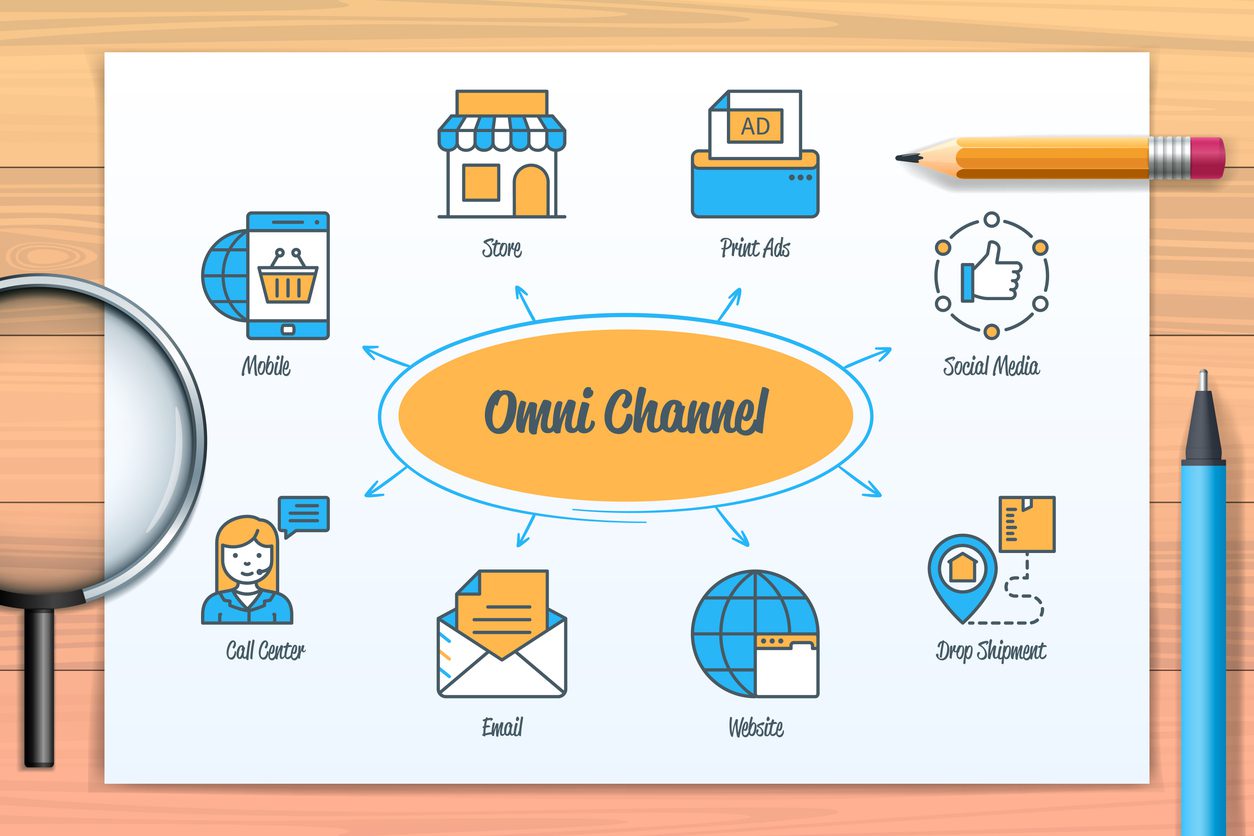
Omnichannel means those channels share data in real time, coordinate messaging based on where a customer is in their journey, and optimize together — not independently. A prospect who saw your display ad yesterday and opened your email this morning receives a different message today than a cold prospect. The channels know this because they’re talking to each other.
A true campaign management platform provides the infrastructure for that coordination — unified data layer, cross-channel audience management, consistent attribution modeling, and the ability to act on insights without switching tools.
The Benefits of Centralized Data — Beyond the Obvious
Most conversations about centralized data stop at “better reporting.” The actual benefits go considerably further:
Faster Decisions, Not Just Better Reports
When campaign data lives in one environment rather than across five platforms, the time between “something is underperforming” and “we’ve fixed it” shrinks dramatically. Teams that used to discover a problem in a weekly report and address it the following Monday can respond in hours. In media buying, that difference in response time translates directly to budget efficiency.
Audience Portability That Actually Works
Centralized data means a high-value audience segment built from CRM data can be activated across paid social, programmatic display, and email simultaneously — from a single interface, with consistent suppression logic. Without centralization, the same audience has to be rebuilt or exported and re-uploaded for every channel separately, introducing delays and inconsistencies that erode performance.
Attribution You Can Actually Trust
Platform-native attribution is designed to make each platform look good. Paid social reports one conversion. Paid search reports the same conversion. Email takes credit too. Without centralized data and a unified attribution model, you’re not measuring marketing performance — you’re measuring how good each platform is at taking credit.
Centralized data produces a single, consistent view of what actually drove each conversion. That’s not just better reporting. It’s the difference between investing budget in what works and investing it in what claims to work.
Best Omnichannel Advertising Tools — What to Actually Look For
The market for best omnichannel advertising tools is crowded and noisy. Here’s what separates genuinely useful platforms from expensive dashboards:
Real-time data integration: Not daily syncs. If your “omnichannel” platform is pulling data at midnight, you’re making today’s decisions with yesterday’s information.
Cross-channel audience management: The ability to create, activate, suppress, and refresh audiences across all channels from a single interface. If you’re exporting CSVs to upload into each channel separately, you’re not omnichannel.
Unified attribution with configurable models: Platforms that offer only last-click attribution are hiding information. Look for platforms that let you model across first touch, linear, time decay, and data-driven approaches so you can understand the full customer journey.
AI-powered optimization: An AI-driven marketing platform doesn’t just display your data; it acts on it. Automated bid adjustments, creative fatigue detection, budget reallocation recommendations, and anomaly flagging should happen continuously — not when someone remembers to check.
Agency-ready architecture: For teams managing multiple clients or brands, the platform needs to support multi-account structures, client-level reporting, and white-label options without requiring a separate instance for each client.
Agencies Offering Centralized Data and Channel Activation — The New Competitive Standard
The best agencies offering centralized data and channel activation have stopped thinking about channels as separate workstreams. They’ve restructured their operations around a unified data layer and built their value proposition on what that infrastructure makes possible: faster optimization, cleaner attribution, and campaign coordination that individual channel specialists can’t achieve working in isolation.
For clients, this shift is significant. An agency running your search, social, and email from separate tools with separate teams and separate reporting is delivering a fundamentally different product than one running everything from a centralized platform with shared data and unified goals. The campaign results are different. The reporting is different. The speed of iteration is different.
This is why centralization has become a competitive differentiator in agency relationships — not a nice-to-have, but an expectation from sophisticated clients who’ve experienced both models.
Where Nloop AI Changes the Equation
Most platforms centralize data in principle. Nloop AI centralizes it in practice — and builds the activation layer directly on top rather than treating reporting and execution as separate problems. As an AI-driven marketing platform designed for agencies and growth-stage brands managing complex multi-channel environments, Nloop AI eliminates the translation costs that accumulate when data moves between disconnected tools. Audiences activate instantly across channels. Attribution is consistent across campaigns. And the AI optimization layer — built into the platform’s core rather than bolted on — continuously adjusts performance without requiring manual intervention between reporting cycles. For agencies tired of stitching together six tools to do what one platform should handle, Nloop AI represents what omnichannel campaign management actually looks like when it’s built from the ground up for the way modern marketing teams work.
See what Nloop AI’s omnichannel platform can do for your campaigns — request a demo →
Frequently Asked Questions
1. What is an omnichannel campaign management platform?
An omnichannel campaign management platform is a centralized system that enables marketers to plan, execute, and optimize campaigns across multiple channels — search, social, email, display, CTV, SMS — from a single interface with shared data and unified attribution. Unlike multichannel tools that manage channels in isolation, an omnichannel platform coordinates campaigns so channels share audience data, align messaging based on customer journey stage, and optimize together rather than independently.
2. What are the main benefits of centralized data for marketing campaigns?
The core benefits of centralized data are faster decision-making (insights available in real time rather than after weekly report compilation), accurate attribution (a single consistent model rather than competing platform-native attribution), portable audiences (segments usable across all channels simultaneously), and coordinated campaign optimization that treats the full media mix as a system rather than a collection of separate channels.
3. How is an AI-driven marketing platform different from a standard campaign management tool?
A standard campaign management tool displays your data and requires human analysis and action. An AI-driven marketing platform continuously processes performance signals and acts on them automatically — adjusting bids, reallocating budget, detecting creative fatigue, and flagging anomalies without waiting for a human to notice and respond. The practical difference is campaign performance that improves around the clock rather than in weekly optimization cycles.
4. What should agencies look for in an omnichannel advertising platform?
The most important capabilities are real-time data integration across all active channels, cross-channel audience management from a single interface, unified attribution modeling with multiple configurable approaches, AI-powered optimization that acts on data automatically, and multi-account architecture that supports agency-scale operations. Platforms that score well on all five deliver meaningfully better results than those that only check one or two boxes.
5. How does centralized data improve attribution accuracy for marketing campaigns?
Platform-native attribution models are designed to credit that platform’s contribution to conversions — which consistently produces inflated performance claims from every channel simultaneously. Centralized data enables a single attribution model that applies consistently across all channels, deduplicates conversions, and reflects the actual path buyers took from awareness to purchase. The result is budget allocation based on what genuinely drives outcomes rather than what each platform claims credit for.