

Category: Blog

  • Brands That Aren’t in AI Answers Are Being Quietly Left Behind

    Brands That Aren’t in AI Answers Are Being Quietly Left Behind

    There’s a gap opening in digital marketing that most brands haven’t named yet. Buyers are asking AI tools questions that should be answered by your brand. Competitors who’ve invested in building AI visibility are showing up in those answers. Brands that haven’t aren’t visible in that conversation — and they often don’t know it’s happening.

    Generative engine optimization is what closes that gap. But the way most teams approach it — as a content problem, a one-time optimization pass, or a vague “AI readiness” initiative — leaves the hardest parts unaddressed. Visibility in AI-generated search requires more than good content. It requires data infrastructure, cross-channel consistency, and measurement frameworks that most marketing programs don’t have in place.

    Elevating Brand Visibility in the AI Search Era

    Elevating brand visibility in the AI search environment requires understanding a fundamental difference between traditional visibility and AI citation: traditional visibility is positional; AI citation is reputational.

    A search ranking tells a user that your page appears at position three. An AI citation tells a user that your brand is the answer. These are different signals with different causes. Rankings are built through link authority and keyword alignment. AI citations are built through the accumulated weight of what AI models have learned about your brand — from every editorial mention, community discussion, expert citation, and structured content signal they’ve absorbed.

    This distinction matters for strategy. You can’t rank your way into AI citation. You have to build your way there — through content that earns trust, authority that extends across platforms, and the kind of consistent brand presence that AI models interpret as credibility.

    What’s the Best Generative Engine Optimization Strategy for AI?

    What’s the best generative engine optimization strategy for AI right now depends on where your brand starts, but the programs that produce consistent AI citation share across all starting points have the same underlying logic.

    Depth over breadth: A single piece of content that fully answers a specific question your buyers are asking AI tools outperforms ten pieces of general content that touch on the topic. AI models cite sources that resolve queries completely. If your content answers part of the question, it won’t be selected as the answer.

    Distribution over creation: The brands most consistently cited in AI-generated answers often don’t have the most content on their own domain. They have the most presence across external, credible sources — industry publications, community platforms, expert directories, review ecosystems. Creating more content on your own site without building external authority is the most common generative engine optimization mistake.

    Continuous over episodic: AI citation isn’t a campaign outcome — it’s an ongoing state. The brands maintaining consistent AI visibility are publishing, earning placements, and monitoring their representation continuously. Episodic investments produce episodic results that don’t compound.

    Measuring Success and ROI in Generative Engine Optimization

    Measuring success and ROI in generative engine optimization is where most programs stall. The attribution chain from AI recommendation to conversion doesn’t have a clean UTM parameter. Buyers who discover brands through AI recommendations don’t announce it in a form field.

    What you can measure — and what produces a reliable directional picture — is a set of correlated signals:

    AI citation share: the percentage of your standard query set in which your brand appears across ChatGPT, Gemini, Perplexity, and Copilot each quarter. This is the primary GEO performance metric.

    Branded search volume trends: when buyers encounter your brand in an AI answer and subsequently search for you by name, branded search volume rises. The correlation between GEO investment periods and branded search growth is one of the clearest indirect attribution signals available.

    Direct traffic patterns: AI-influenced discovery frequently converts to direct navigation — typing the URL, searching the exact brand name — rather than clicking a tracked link. Rising direct traffic correlated with AI citation growth tells a coherent story.

    Inbound lead quality shifts: buyers who arrive via AI citation tend to be more informed and more qualified at first contact. If average lead quality improves alongside AI visibility growth, that’s a meaningful ROI signal even without direct attribution.

    None of these signals is definitive in isolation. Together, they build a case that a CFO can read.

    How Agencies Offering Centralized Data and Channel Activation Change the GEO Equation

    Agencies offering centralized data and channel activation have a structural advantage in generative engine optimization execution that’s easy to understate. GEO isn’t a channel — it’s an outcome that depends on what happens across many channels simultaneously.

    Content quality feeds it. Distribution breadth feeds it. Review platform presence feeds it. Social authority feeds it. Earned media placements feed it. When these inputs are managed in separate silos by separate teams with separate tools, the feedback loop between investment and citation growth closes slowly — too slowly to optimize.

    When they’re centralized, the feedback loop compresses. You know within weeks whether a content investment is generating the right kind of external engagement. You can redirect budget from what isn’t moving the needle to what is. You can identify exactly which authority signals are missing and fill them deliberately.

    This operational advantage is the difference between a GEO program that accumulates results over time and one that plateaus after initial gains because nobody can identify what to do next.

    Where Nloop AI Changes the Outcome

    The gap between knowing that generative engine optimization requires centralized data and actually having that infrastructure in place is where most brands stall. Nloop AI was designed specifically to close it — bringing together the content performance data, distribution analytics, cross-channel authority tracking, and AI citation monitoring that GEO execution requires into a single operational environment. For brands that have invested in content and channels without seeing corresponding AI visibility gains, Nloop AI provides the visibility into what’s working and the activation infrastructure to do more of it faster. The result is a GEO program that learns and compounds rather than one that runs at a fixed rate until the budget runs out.

    See how Nloop AI builds AI visibility into your marketing operation — talk to the team →

    Frequently Asked Questions

    1. What is generative engine optimization and why does it matter? 

    Generative engine optimization is the practice of building brand content, authority, and presence so AI tools cite and recommend your brand in generated answers. It matters because AI-generated answers are becoming a primary research touchpoint for buyers — brands not appearing in those answers are invisible to a growing segment of their market.

    2. What’s the best strategy for elevating brand visibility in AI search? 

    Prioritize content depth over breadth, external authority over on-site volume, and continuous investment over episodic campaigns. A single expert piece that fully resolves a query earns more AI citations than multiple surface-level pieces that partially address it.

    3. How do you measure ROI in generative engine optimization? 

    Use a combination of: AI citation share (tracked quarterly across major platforms), branded search volume trends, direct traffic growth correlated with GEO investment periods, and inbound lead quality shifts. Direct attribution is difficult; the correlated signal picture builds a defensible ROI case.

    4. Why do agencies with centralized data perform better at GEO? 

    Because the feedback loop between investment and citation growth closes faster, when content, distribution, authority, and citation monitoring data are unified, teams can identify what’s driving results and optimize toward it — rather than managing disconnected inputs with no visibility into which is producing outcomes.

    5. How long does it take to see AI visibility improvements? 

    Brands with existing authority and content typically see measurable improvements in citations within 60–90 days of targeted investment. The more important dynamic is compounding — brands that invest consistently build AI citation authority that becomes harder for competitors to match over time.

  • Why Programmatic Display Is the Standard for Performance-Driven Advertisers

    Why Programmatic Display Is the Standard for Performance-Driven Advertisers

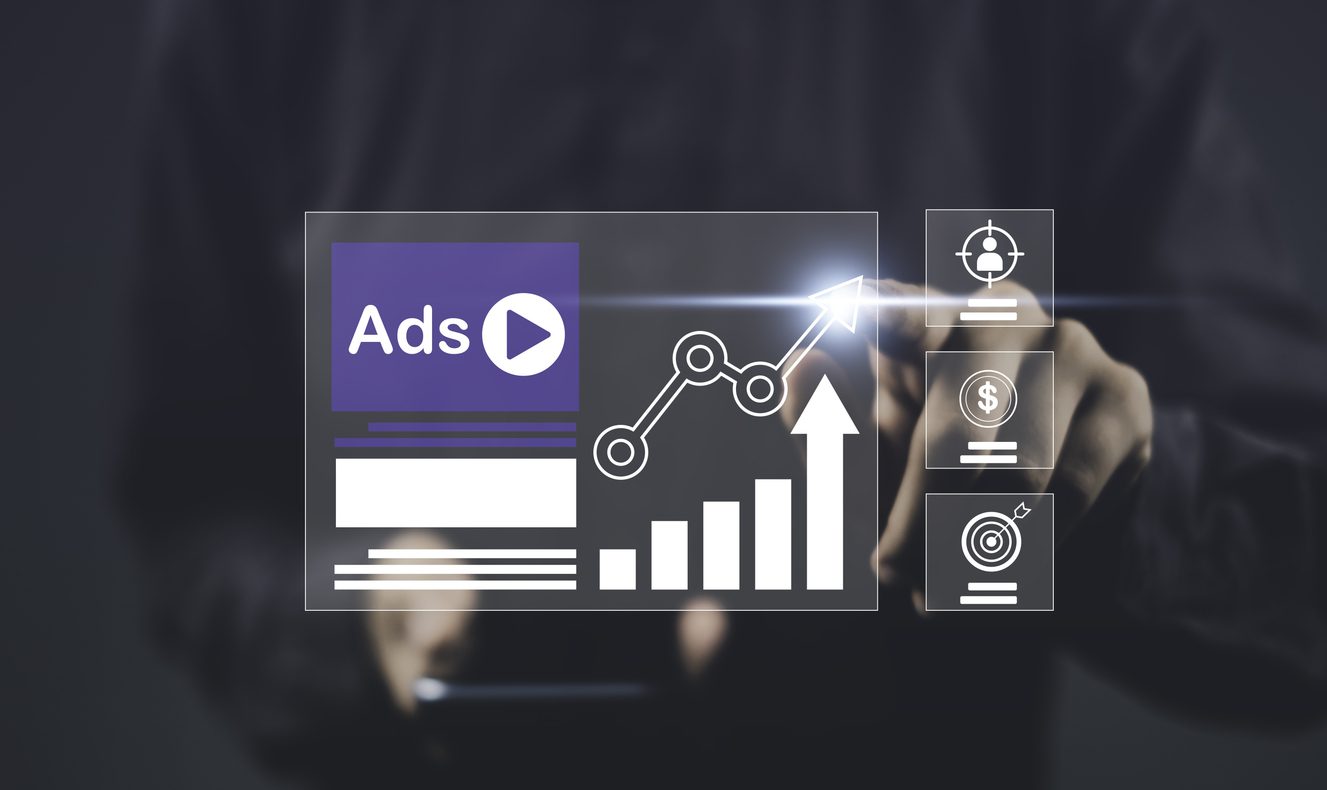
    There’s a version of digital advertising that runs on gut instinct, manual placements, and fingers crossed that the right audience happens to be on the right site at the right time. And then there’s display advertising programmatic marketing — where every impression is evaluated, priced, and served in real time based on who’s actually seeing it.

    The shift from the former to the latter isn’t just a technology upgrade. It’s a fundamentally different approach to how advertising budgets are deployed, how audiences are reached, and how performance is measured and improved.

    What Is Programmatic Display Advertising?

    What is programmatic display advertising and how does it differ from traditional display buying?

    Traditional display advertising is negotiated directly with publishers — you agree on a placement, a price, and a run of dates, and your ad appears to whoever visits that site during that period. The targeting is broad. The pricing is fixed. The feedback loop is slow.

    Programmatic flips every part of that model. Instead of buying space on a specific site, you’re buying access to specific audiences — and the technology evaluates each available impression in milliseconds, decides whether it matches your target criteria, and bids accordingly. If the impression matches, you bid. If it doesn’t, you pass. Every dollar is allocated based on relevance rather than presence.

    How Display Programmatic Advertising Works in Practice

    Display programmatic advertising runs through a real-time bidding ecosystem that connects advertisers, publishers, and data layers in a continuous automated process.

    Here’s the sequence:

    1. A user loads a page that has advertising inventory available through a supply-side platform (SSP)
    2. The SSP broadcasts a bid request to multiple demand-side platforms (DSPs) simultaneously
    3. Your DSP evaluates the impression against your targeting criteria — demographics, behavioral signals, context, device, location
    4. A bid is submitted in real time if the impression qualifies, with the bid price reflecting the impression’s value based on your campaign goals
    5. The winning bid’s creative is served — The entire auction and ad delivery process completes in under 100 milliseconds

    The result is a media buy that’s continuously refined based on which impressions actually perform — and which don’t.

    Display Advertising Programmatic vs. Traditional Display Buying

    Understanding display advertising programmatic in contrast to conventional display buying clarifies exactly what the technology changes:

    Traditional DisplayProgrammatic Display
    Audience targetingSite-basedAudience-based
    Pricing modelFixed CPMReal-time auction
    OptimizationEnd-of-campaignContinuous
    Minimum spendOften highFlexible
    MeasurementLimitedImpression-level data
    Creative testingManualAutomated

    The core difference: traditional display reaches everyone on a given site. Programmatic reaches specific people, wherever they are online.

    Display Ads vs. Programmatic: Choosing the Right Approach

    The display ads vs. programmatic question isn’t always either/or — but the case for programmatic gets stronger as campaign goals become more performance-oriented.

    When traditional display makes sense:

    • Premium editorial placements where context is the primary value
    • Brand partnerships that require a guaranteed presence on a specific publisher
    • High-profile sponsorships where placement exclusivity matters

    When programmatic wins:

    • Performance campaigns where CPL, ROAS, or CPA is the primary metric
    • Retargeting audiences based on behavioral signals
    • Prospecting at scale across a diverse publisher network
    • Any campaign that benefits from continuous optimization rather than set-and-forget delivery

    For most performance-driven advertisers, programmatic isn’t a consideration — it’s the default. The targeting precision, the optimization capability, and the measurement depth it provides simply can’t be replicated through manual placement buys.

    What Nloop AI Adds to Programmatic Display

    Running programmatic campaigns through a DSP gives you access to the infrastructure. Getting consistent performance from that infrastructure requires the strategic and analytical layer that most brands don’t have in-house. Nloop AI builds the campaign architecture, audience strategy, creative framework, and optimization cadence that separates programmatic campaigns that perform from ones that simply run. Whether you’re entering programmatic display for the first time or rebuilding a program that hasn’t delivered its potential, Nloop AI brings the data-driven discipline and platform expertise to make your budget work harder than any comparable spend in traditional display could.

    Talk to Nloop AI about building a programmatic display program that performs →

    Frequently Asked Questions

    1. What is programmatic display advertising? 

    Programmatic display advertising is an automated method of buying digital ad placements in real time. Rather than negotiating fixed placements with publishers, advertisers use technology to bid on individual impressions based on audience targeting criteria — reaching specific people across any site in a publisher network rather than everyone on a specific site.

    2. How is programmatic display different from traditional display advertising? 

    Traditional display buys space on specific sites at fixed prices. Programmatic buys access to specific audiences at auction prices determined in real time. The result is more precise targeting, continuous optimization based on performance data, and more flexible budget allocation than traditional direct buys allow.

    3. What types of businesses benefit most from programmatic display? 

    Businesses with measurable performance goals — lead generation, e-commerce sales, app installs — benefit most, because programmatic’s real-time optimization is designed to improve against defined metrics. Businesses with large addressable audiences or complex retargeting requirements also see strong returns from programmatic’s audience-matching capabilities.

    4. How is budget managed in a programmatic campaign? 

    Programmatic campaigns typically run on CPM (cost per thousand impressions) or CPC (cost per click) models, with bids set dynamically based on impression quality. Budget is allocated automatically toward the impressions and audiences that perform best — shifting away from underperforming segments without manual intervention.

    5. What data is available from programmatic display campaigns? 

    Programmatic campaigns generate impression-level data including device type, geography, time of day, audience segment, creative version served, and downstream conversion signals. This granularity enables optimization decisions that campaign-level reporting from traditional display buys simply can’t support.

  • Not All GEO Strategies Are Equal — Here’s What Separates the Ones That Work

    Not All GEO Strategies Are Equal — Here’s What Separates the Ones That Work

    Brands are waking up to generative engine optimization at different speeds. Some are still treating it as a future consideration. Others are building strategies — but building them wrong, focusing on content volume rather than content architecture, or on a single AI platform rather than the full ecosystem where their buyers are actually searching.

    The gap between a GEO strategy that produces measurable AI citation growth and one that produces activity without results comes down to four things: where you build authority, how you structure your content, how you measure what’s working, and how quickly your data feeds your next move. Get all four right and generative engine optimization stops being an aspiration and starts being a competitive advantage you can defend.

    What’s the Best Generative Engine Optimization Strategy for AI in 2026?

    What’s the best generative engine optimization strategy for AI right now? The honest answer is that it depends on where your brand currently stands — but the highest-performing strategies across categories share a common architecture.

    They treat AI citation as a supply chain problem. Your brand needs to be the most credible, most consistently mentioned, most clearly structured source of information about your category — across enough external platforms that AI models encounter your brand regularly in trusted contexts. That’s the supply. The output is recommendation frequency.

    The three layers every effective GEO strategy needs to address:

    Layer 1 — Content that AI can extract: Not content optimized for keywords, but content organized around questions. Direct answers early. Clear heading hierarchy. FAQ sections that match the conversational phrasing users actually type into AI tools. If an AI model can’t pull a clean, confident answer from your content in two seconds, it won’t cite you — it’ll cite someone whose content it can.

    Layer 2 — Authority that AI can verify: AI models don’t just trust your own website. They cross-reference. Brand mentions in industry publications, expert quotes in third-party articles, review platform presence, community forum contributions — these distributed citations are what makes a model confident enough to recommend your brand in a high-stakes response. A brand with one authoritative website but thin external presence is less citable than a brand with moderate on-site content and dense cross-platform authority.

    Layer 3 — Monitoring that closes the loop: The brands improving fastest in AI citation are the ones treating it as a measurement discipline, not a content project. Quarterly audits across ChatGPT, Gemini, Perplexity, and Copilot. Tracked query sets. Documented share of mentions. Identified gaps. That data tells you exactly which content to create next and which authority signals to pursue — removing the guesswork that makes most GEO programs stall.

    AI Brand Mentions: The Metric That Replaces Rankings in This Environment

    Traditional SEO is measured in positions. AI brand mentions are measured in share — how often your brand surfaces across the standard set of category-relevant queries you’re tracking, compared to competitors, over time.

    This is a fundamentally different measurement framework. A brand ranked #1 on Google for ten keywords and a brand appearing in 70% of AI-generated responses in its category are winning in different ways. The second brand is increasingly the one influencing pre-search decision-making — reaching buyers at the moment they ask for guidance, not the moment they’ve already decided to search.

    Tracking AI brand mentions effectively requires:

    • A fixed query set of 15–25 questions real buyers ask about your category
    • Consistent testing across all major AI platforms — not just ChatGPT
    • Documentation of competitors cited alongside or instead of your brand
    • Accuracy tracking — whether AI tools describe your brand correctly and favorably

    This data is your GEO scorecard. It’s not vanity metrics. It directly maps to where your brand sits in buyer consideration before they ever visit your website.

    Measuring Success and ROI in Generative Engine Optimization

    Measuring success and ROI in generative engine optimization requires accepting that direct attribution is harder than in paid channels — but indirect signals are more meaningful than most teams initially realize.

    Branded search volume trends are the clearest proxy. When a buyer encounters your brand in an AI recommendation and then searches for you by name, that branded search registers in your analytics. A rising trend in branded search, correlated with GEO investment timelines, is one of the strongest indicators that AI citation is generating real awareness.

    Direct traffic patterns tell a similar story. Inbound lead quality shifts — shorter sales cycles, higher deal values, more informed first conversations — are the downstream signal that suggests AI-influenced discovery is bringing better-fit buyers through the door.

    None of these signals are perfect. But together, they build a directional picture of whether your GEO strategy is working — and they improve as your monitoring practice matures.

    How Agencies Offering Centralized Data and Channel Activation Accelerate GEO

    Agencies offering centralized data and channel activation have a structural advantage in GEO execution that’s easy to underestimate. When your content performance data, distribution analytics, authority signal tracking, and AI citation monitoring all live in the same environment, the feedback loop between what you publish and what gets cited compresses dramatically.

    The alternative — managing GEO across disconnected tools and teams — introduces lag at every stage. You don’t know what’s working until weeks after you could have acted on it. That lag is expensive in a discipline where early movers build citation advantages that compound.

    Where Nloop AI Takes This From Framework to Execution

    Strategy without operational infrastructure is just a document. Nloop AI is built to close the gap between knowing what generative engine optimization requires and actually doing it at scale — centralizing the data, surfacing the insights, and activating the right channels at the right time so your brand builds AI citation authority as a byproduct of a well-run marketing operation rather than a separate project that competes for resources. For brands that have the strategy but not the infrastructure, and for agencies managing GEO across multiple clients, Nloop AI provides the operational foundation that makes the whole system work.

    See how Nloop AI turns GEO strategy into measurable results — talk to the team →

    Frequently Asked Questions

    1. What is the best generative engine optimization strategy for AI search?

    Build content AI can extract cleanly, develop cross-platform authority through external citations, and monitor AI brand mentions quarterly across all major platforms. The combination of these three — not any single tactic — is what produces consistent AI citation growth.

    2. How do you measure AI brand mentions? 

    Test a fixed set of 15–25 category-relevant queries across ChatGPT, Gemini, Perplexity, and Copilot each quarter. Track how often your brand appears, how accurately it’s described, and what competitors are cited alongside or instead of you. Share of mention over time is your primary KPI.

    3. How do you measure ROI from generative engine optimization? 

    Use branded search volume trends and direct traffic growth as primary proxies. Inbound lead quality improvements — shorter sales cycles, better-fit buyers — are the downstream signal. Direct attribution is difficult, but these indicators build a reliable directional picture.

    4. Why do agencies with centralized data perform better at GEO? 

    Because the feedback loop is shorter. When content performance, distribution data, and AI citation monitoring are unified, you can identify what’s working and act on it faster than teams managing the same information across disconnected tools.

    5. How long does it take to see results from a GEO strategy? 

    Brands with existing authority and content typically see measurable AI citation improvements within 60–90 days of targeted investment. The more important variable is compounding — the longer the strategy runs consistently, the harder competitors find it to close the gap.

  • The Data Problem Nobody Talks About — And Why It’s Costing You

    The Data Problem Nobody Talks About — And Why It’s Costing You

    Marketing teams are drowning in data and starving for insight. Reports multiply. Dashboards stack up. And somehow, after all of it, the question “what should we actually do next?” still gets answered by intuition more than evidence.

    The problem isn’t volume. It’s trust. When data comes from disconnected sources with conflicting methodologies, inconsistent attribution, and platform-native bias baked in, even the most experienced marketers hesitate before acting on it. That hesitation is expensive — in missed optimization windows, misallocated budget, and campaigns that coast when they should pivot.

    Trusted data solutions aren’t a nice-to-have. They’re the infrastructure that determines whether an AI-driven marketing platform delivers genuine competitive advantage or just a faster path to the same uncertain decisions.

    What Makes a Data Solution Actually Trustworthy?

    The word “trusted” in marketing technology is overused to the point of meaninglessness. Every platform claims data integrity. Few define what it actually requires. Here’s what genuine trusted data solutions look like in practice:

    Single-source attribution across all channels: Data that flows from paid search, social, email, display, and CTV into one environment — with a consistent attribution model applied uniformly — eliminates the competing credit claims that make platform-native reporting so misleading. One conversion gets counted once, attributed accurately.

    Verified first-party data integration: As third-party cookies continue to disappear, the quality of a platform’s first-party data infrastructure determines the quality of its targeting and measurement. Trusted data means verified, consented, properly maintained first-party signals — not probabilistic guesses dressed up as certainty.

    Transparent data lineage: Marketers should be able to trace where a data point came from, how it was processed, and when it was last updated. Black-box data — accurate-looking numbers with no visible methodology — is a liability, not an asset.

    Real-time quality monitoring: Data degrades. Sources break. Pipelines fail silently. A trusted AI-powered data platform monitors its own data quality continuously and flags anomalies before they compound into bad decisions made with confidence.

    AI-Driven Marketing Platform — What It Actually Adds

    An AI-driven marketing platform built on trusted data solves a problem that neither AI nor data quality alone can solve independently: turning reliable information into continuous, autonomous action.

    Here’s the distinction that matters: most marketing platforms give you better information. An AI-driven platform acts on it — continuously, at a speed and scale that human optimization cycles can’t match.

    Predictive Audience Modeling

    Rather than building audiences from historical behavior and hoping they hold, AI-driven platforms model which audience segments are most likely to convert given current signals — adjusting targeting in real time as those signals shift. The result is audiences that stay relevant rather than audiences that were relevant when they were built three weeks ago.

    Autonomous Budget Reallocation

    When campaign performance data is trusted and unified, AI can redistribute budget across channels, ad sets, and placements continuously — capturing efficiency gains that weekly human optimization cycles consistently miss. This isn’t automation for automation’s sake. It’s the compound effect of hundreds of micro-optimizations made while the team is focused elsewhere.

    Creative Intelligence

    AI systems trained on trusted performance data can identify which creative elements — headline structures, visual formats, message angles — correlate with performance across audience segments, helping creative teams build from evidence rather than starting from zero each cycle.

    The Data Marketplace Advantage — Access Beyond Your Own First-Party Data

    A data marketplace integrated into the platform architecture addresses a fundamental limitation of first-party-only approaches: your own data only covers the customers you already have.

    For brands trying to reach new audiences, expand into new markets, or target buyers earlier in their decision journey, access to verified third-party data signals — purchase intent indicators, category affinity data, demographic and behavioral overlays — from a curated marketplace changes what’s possible.

    The keyword is curated. A data marketplace that prioritizes volume over verification creates the same trust problem from the other direction. Nloop AI’s marketplace approach filters for data quality before data quantity, ensuring that every signal added to a campaign environment meets the same integrity standards as the first-party data it supplements.

    Agencies Offering Centralized Data and Channel Activation — The Structural Advantage

    Agencies offering centralized data and channel activation operate fundamentally differently from agencies still managing channels in silos. The benefits of centralized data for agencies aren’t just about efficiency — they’re about the quality of what you can deliver to clients.

    When all campaign data flows into a unified environment:

    • Client reporting becomes defensible: One consistent attribution model applied across all channels, rather than each platform’s self-serving version
    • Cross-channel optimization becomes real: Budget can move between channels based on unified performance signals, not siloed platform metrics
    • Audience consistency is maintained: Segments, exclusions, and suppression lists apply across all channels simultaneously, eliminating the gaps that fragmented management creates
    • Campaign management becomes proactive: AI identifies problems and opportunities in real time rather than waiting for a weekly report to surface them

    Agencies that have built this infrastructure have a product that agencies managing six separate tools simply cannot replicate — regardless of how talented their individual channel specialists are.

    Where Nloop AI Delivers Differently

    The distance between a data platform that sounds right and one that operates correctly under real campaign conditions is wider than most evaluations reveal. Nloop AI was built from the architecture outward — starting with data integrity as the foundational requirement and building the AI-driven marketing platform layer on top of it, rather than retrofitting AI features onto a reporting tool. For agencies and brands that have experienced what unreliable data costs them in confidence and campaign performance, Nloop AI represents what the category should have looked like from the beginning: trusted data, intelligent activation, and a unified environment where every decision is made from the same clean source of truth.

    See what Nloop AI’s trusted data infrastructure can do for your campaigns — request a demo →

    Frequently Asked Questions

    1. What is an AI-driven marketing platform? 

    An AI-driven marketing platform is a campaign management system that uses artificial intelligence to continuously optimize marketing performance — adjusting targeting, budget allocation, creative rotation, and audience management in real time, rather than waiting for human-led optimization cycles. The most effective versions are built on trusted, unified data foundations that ensure the AI is acting on accurate signals rather than compounding errors from unreliable inputs.

    2. What are trusted data solutions in marketing? 

    Trusted data solutions are data infrastructure and processes that ensure marketing decisions are based on accurate, verified, consistently attributed information. Key characteristics include single-source attribution across all channels, verified first-party data integration, transparent data lineage, and real-time quality monitoring. The opposite — disconnected data sources with conflicting methodologies — produces the “drowning in data, starving for insight” problem most marketing teams recognize.

    3. What is a data marketplace and how does it help marketing campaigns? 

    A data marketplace is a curated environment where marketers can access verified third-party data signals — purchase intent, category affinity, behavioral and demographic overlays — to supplement their own first-party data. It enables reach beyond existing customers, targeting of new audiences earlier in the decision journey, and richer audience modeling than first-party data alone can support. The value depends entirely on the quality standards applied to marketplace data sources.

    4. What are the key benefits of centralized data for marketing agencies? 

    Centralized data gives agencies defensible client reporting (one consistent attribution model), real cross-channel optimization (budget moving based on unified signals rather than siloed metrics), audience consistency across all channels simultaneously, and the ability to surface performance insights in real time rather than weekly reports. These capabilities compound into meaningfully better campaign results than fragmented channel management can produce.

    5. How does a campaign management platform with trusted data differ from standard tools? 

    Standard campaign management tools often aggregate data from connected platforms without standardizing how that data is processed, attributed, or validated. A campaign management platform built on trusted data applies consistent methodology across all inputs, monitors data quality continuously, and provides transparent visibility into data lineage. The practical difference is confidence — marketers can act decisively on the data rather than hedging because they’re not sure if the numbers are reliable.

  • Six Channels. One Dashboard. Zero Excuses for Fragmented Campaigns.

    Six Channels. One Dashboard. Zero Excuses for Fragmented Campaigns.

    Picture the average Tuesday for a digital marketing team running campaigns across paid search, social, email, display, connected TV, and SMS. Someone is pulling last week’s paid data. Someone else is checking email open rates in a separate platform. A third person is compiling everything into a spreadsheet that will be out of date before it’s finished.

    This is the default state of multichannel marketing — and it’s why campaigns consistently underperform their potential. The channels are live. The data exists. The problem is that nobody can see all of it at the same time, in the same place, connected to the same goals.

    An omnichannel campaign management platform solves this structurally, not by adding another report to the pile, but by eliminating the pile entirely.

    What Makes a Campaign Management Platform Truly Omnichannel?

    The word “omnichannel” is overused to the point of meaninglessness in marketing technology. Every platform claims it. Very few deliver it. So what actually separates a genuine omnichannel campaign management platform from a multichannel tool with a better marketing budget?

    The distinction comes down to data architecture and coordination:

    Multichannel means running campaigns across multiple channels. Each channel operates in its own environment with its own reporting, its own audience data, and its own optimization logic.

    Omnichannel means those channels share data in real time, coordinate messaging based on where a customer is in their journey, and optimize together — not independently. A prospect who saw your display ad yesterday and opened your email this morning receives a different message today than a cold prospect. The channels know this because they’re talking to each other.

    A true campaign management platform provides the infrastructure for that coordination — unified data layer, cross-channel audience management, consistent attribution modeling, and the ability to act on insights without switching tools.

    The Benefits of Centralized Data — Beyond the Obvious

    Most conversations about centralized data stop at “better reporting.” The actual benefits go considerably further:

    Faster Decisions, Not Just Better Reports

    When campaign data lives in one environment rather than across five platforms, the time between “something is underperforming” and “we’ve fixed it” shrinks dramatically. Teams that used to discover a problem in a weekly report and address it the following Monday can respond in hours. In media buying, that difference in response time translates directly to budget efficiency.

    Audience Portability That Actually Works

    Centralized data means a high-value audience segment built from CRM data can be activated across paid social, programmatic display, and email simultaneously — from a single interface, with consistent suppression logic. Without centralization, the same audience has to be rebuilt or exported and re-uploaded for every channel separately, introducing delays and inconsistencies that erode performance.

    Attribution You Can Actually Trust

    Platform-native attribution is designed to make each platform look good. Paid social reports one conversion. Paid search reports the same conversion. Email takes credit too. Without centralized data and a unified attribution model, you’re not measuring marketing performance — you’re measuring how good each platform is at taking credit.

    Centralized data produces a single, consistent view of what actually drove each conversion. That’s not just better reporting. It’s the difference between investing budget in what works and investing it in what claims to work.

    Best Omnichannel Advertising Tools — What to Actually Look For

    The market for best omnichannel advertising tools is crowded and noisy. Here’s what separates genuinely useful platforms from expensive dashboards:

    Real-time data integration: Not daily syncs. If your “omnichannel” platform is pulling data at midnight, you’re making today’s decisions with yesterday’s information.

    Cross-channel audience management: The ability to create, activate, suppress, and refresh audiences across all channels from a single interface. If you’re exporting CSVs to upload into each channel separately, you’re not omnichannel.

    Unified attribution with configurable models: Platforms that offer only last-click attribution are hiding information. Look for platforms that let you model across first touch, linear, time decay, and data-driven approaches so you can understand the full customer journey.

    AI-powered optimization: An AI-driven marketing platform doesn’t just display your data; it acts on it. Automated bid adjustments, creative fatigue detection, budget reallocation recommendations, and anomaly flagging should happen continuously — not when someone remembers to check.

    Agency-ready architecture: For teams managing multiple clients or brands, the platform needs to support multi-account structures, client-level reporting, and white-label options without requiring a separate instance for each client.

    Agencies Offering Centralized Data and Channel Activation — The New Competitive Standard

    The best agencies offering centralized data and channel activation have stopped thinking about channels as separate workstreams. They’ve restructured their operations around a unified data layer and built their value proposition on what that infrastructure makes possible: faster optimization, cleaner attribution, and campaign coordination that individual channel specialists can’t achieve working in isolation.

    For clients, this shift is significant. An agency running your search, social, and email from separate tools with separate teams and separate reporting is delivering a fundamentally different product than one running everything from a centralized platform with shared data and unified goals. The campaign results are different. The reporting is different. The speed of iteration is different.

    This is why centralization has become a competitive differentiator in agency relationships — not a nice-to-have, but an expectation from sophisticated clients who’ve experienced both models.

    Where Nloop AI Changes the Equation

    Most platforms centralize data in principle. Nloop AI centralizes it in practice — and builds the activation layer directly on top rather than treating reporting and execution as separate problems. As an AI-driven marketing platform designed for agencies and growth-stage brands managing complex multi-channel environments, Nloop AI eliminates the translation costs that accumulate when data moves between disconnected tools. Audiences activate instantly across channels. Attribution is consistent across campaigns. And the AI optimization layer — built into the platform’s core rather than bolted on — continuously adjusts performance without requiring manual intervention between reporting cycles. For agencies tired of stitching together six tools to do what one platform should handle, Nloop AI represents what omnichannel campaign management actually looks like when it’s built from the ground up for the way modern marketing teams work.

    See what Nloop AI’s omnichannel platform can do for your campaigns — request a demo →

    Frequently Asked Questions

    1. What is an omnichannel campaign management platform? 

    An omnichannel campaign management platform is a centralized system that enables marketers to plan, execute, and optimize campaigns across multiple channels — search, social, email, display, CTV, SMS — from a single interface with shared data and unified attribution. Unlike multichannel tools that manage channels in isolation, an omnichannel platform coordinates campaigns so channels share audience data, align messaging based on customer journey stage, and optimize together rather than independently.

    2. What are the main benefits of centralized data for marketing campaigns? 

    The core benefits of centralized data are faster decision-making (insights available in real time rather than after weekly report compilation), accurate attribution (a single consistent model rather than competing platform-native attribution), portable audiences (segments usable across all channels simultaneously), and coordinated campaign optimization that treats the full media mix as a system rather than a collection of separate channels.

    3. How is an AI-driven marketing platform different from a standard campaign management tool? 

    A standard campaign management tool displays your data and requires human analysis and action. An AI-driven marketing platform continuously processes performance signals and acts on them automatically — adjusting bids, reallocating budget, detecting creative fatigue, and flagging anomalies without waiting for a human to notice and respond. The practical difference is campaign performance that improves around the clock rather than in weekly optimization cycles.

    4. What should agencies look for in an omnichannel advertising platform? 

    The most important capabilities are real-time data integration across all active channels, cross-channel audience management from a single interface, unified attribution modeling with multiple configurable approaches, AI-powered optimization that acts on data automatically, and multi-account architecture that supports agency-scale operations. Platforms that score well on all five deliver meaningfully better results than those that only check one or two boxes.

    5. How does centralized data improve attribution accuracy for marketing campaigns? 

    Platform-native attribution models are designed to credit that platform’s contribution to conversions — which consistently produces inflated performance claims from every channel simultaneously. Centralized data enables a single attribution model that applies consistently across all channels, deduplicates conversions, and reflects the actual path buyers took from awareness to purchase. The result is budget allocation based on what genuinely drives outcomes rather than what each platform claims credit for.

  • Your Brand Doesn’t Live in One AI — It Lives in All of Them

    Your Brand Doesn’t Live in One AI — It Lives in All of Them

    Most GEO conversations start and end with ChatGPT. And while ChatGPT is the most visible AI tool, it’s far from the only one shaping purchasing decisions right now. Gemini is embedded in Google Search and Workspace. Research-oriented professionals use perplexity. Microsoft Copilot is woven into the software stack of millions of businesses. Meta AI is active across Instagram, WhatsApp, and Facebook.

    A brand that only optimizes for one platform is building a monoculture. A brand that builds presence across all of them is practicing what’s emerging as the most durable form of generative engine optimization — the multipolar approach.

    Here’s what that looks like in practice, and how to know whether it’s working.

    Why Multipolar AI Visibility Is the Right Mental Model

    The academic concept of a multipolar world — multiple centers of power rather than one dominant one — maps surprisingly well onto the current AI search landscape. No single platform controls where buyers go for answers. Different users, industries, and query types route to different AI tools. A professional doing deep research uses Perplexity. A consumer checking options mid-purchase might ask Google’s AI Overview. A business analyst queries Copilot from inside Excel.

    What’s the best generative engine optimization strategy for AI in this environment? It’s not platform-specific optimization — it’s building the kind of content, authority, and brand signal density that performs across all of them simultaneously.

    The inputs that drive AI citation — expert-level content, cross-platform authority signals, clear answer-shaped structure — are consistent across platforms. The delivery is multipolar; the foundation is unified.

    The Three Inputs That Drive AI Brand Mentions Across Platforms

    Regardless of which AI tool a buyer uses, three things consistently determine whether your brand appears in the answer:

    Content That AI Can Actually Use

    AI models don’t retrieve pages — they synthesize from patterns. Content that makes it into AI-generated answers tends to share a common profile: it addresses specific questions directly, it’s organized so key points can be extracted cleanly, and it offers something — a perspective, a data point, an insight — that generic content doesn’t. Thin, repetitive, surface-level content rarely generates AI brand mentions. Deep, structured, specific content earns them.

    Cross-Platform Authority Signals

    A brand cited in a respected industry publication, mentioned in a podcast, referenced in a community forum, and reviewed on a third-party platform exists in AI training data at multiple points, which creates the kind of signal density that language models interpret as authority. The multipolar GEO approach requires building this density intentionally, not waiting for it to accumulate organically.

    Consistent Brand Identity Across Contexts

    AI models are pattern-matching systems. When your brand name appears consistently alongside the same areas of expertise, the same core value proposition, and the same descriptive language across many contexts, the model forms a reliable representation. Inconsistency — different positioning on different platforms, vague descriptions, or absence from key contexts — produces weak or absent AI citations even when a brand is technically well-known.

    How to Measure Company Presence in Generative AI Recommendations

    This is where most brands fall short — not for lack of interest, but for lack of a repeatable system. How to measure company presence in generative engine recommendations doesn’t require a dedicated platform (though those are emerging). It requires a structured process.

    The core measurement approach:

    • Build a standard query set — 15 to 20 questions that a real prospect in your category would ask an AI tool. Include product-category questions, problem-solution questions, and competitor comparison questions.
    • Run the query set quarterly across all major platforms — ChatGPT, Gemini, Perplexity, Copilot, and Meta AI at a minimum. Document which brands are named, in what context, and with what descriptive language.
    • Track your share of mentions vs. competitors — how often your brand appears relative to the brands that consistently do, across the full query set.
    • Note accuracy and framing — is the AI describing your brand correctly? Outdated information, incorrect positioning, or missing key differentiators are flags that indicate content gaps requiring attention.

    This audit becomes both a performance metric and an editorial roadmap. The queries where you’re absent are the content briefs. The descriptions you wish were different are the positioning gaps.

    Measuring Success and ROI in Generative Engine Optimization

    The honest answer about measuring success and ROI in generative engine optimization is that direct attribution remains difficult — AI tools don’t pass UTM parameters, and most users don’t disclose that they found a brand through a ChatGPT recommendation.

    But indirect signals are more measurable than most brands realize:

    • Branded search volume trends — users who encounter your brand in an AI answer frequently search for you by name immediately after. A rising branded search trend, tracked against the timeline of GEO investment, is a meaningful proxy.
    • Direct traffic growth — same mechanism, same logic. AI-influenced discovery often converts to direct URL navigation.
    • Inbound lead quality — leads sourced through AI-influenced channels tend to arrive more informed, with more specific questions and clearer intent. Average deal size and sales cycle length often improve as AI citation grows.
    • Share of voice in AI tools — the quarterly audit metric above. If your brand appears in 4 of 20 queries today and 12 of 20 in six months, that’s a measurable GEO win with strategic implications.

    The goal of generative engine optimization measurement isn’t a single clean ROI number — it’s a directional signal that your brand is becoming more present, more accurate, and more recommended across the platforms where your buyers are making decisions.

    How Nloop AI Approaches Multipolar GEO for Growing Brands

    Building AI visibility across five platforms simultaneously — while also running campaigns, producing content, and reporting to clients — requires more than a good strategy document. Nloop AI is built to operationalize this kind of multi-platform intelligence layer. Whether it’s identifying the specific query gaps where a brand is absent from AI recommendations, structuring content for maximum extractability, or tracking AI brand mentions over time as a performance metric, Nloop AI brings the systematic rigor that turns generative engine optimization from a concept into a measurable program. The brands winning in AI search today aren’t the ones that moved fastest. They’re the ones that moved most deliberately.

    Explore how Nloop AI builds measurable AI visibility for your brand →

    People Also Ask: GEO, AI Visibility, and Measurement

    1. What is generative engine optimization, and why does it matter for businesses? 

    Generative engine optimization (GEO) is the practice of structuring a brand’s content, authority signals, and digital presence so that AI tools — ChatGPT, Gemini, Perplexity, Copilot — cite or recommend the brand in generated answers. It matters because AI-generated responses are increasingly where buyers form initial impressions and make shortlist decisions, often before visiting any website. Brands absent from AI answers are invisible at the earliest stage of the buyer journey.

    2. What’s the best generative engine optimization strategy for AI search? 

    The most durable strategy is a multipolar one — building content depth and cross-platform authority signals that perform consistently across all major AI tools simultaneously, rather than optimizing for one platform at a time. This means publishing expert-level structured content, earning cross-platform brand mentions in authoritative contexts, and maintaining a monitoring system to track AI citation across platforms and query types.

    3. How do I measure my company’s presence in generative AI recommendations? 

    Build a standard set of 15 to 20 prospect-realistic questions and run them quarterly across ChatGPT, Gemini, Perplexity, Copilot, and Meta AI. Document brand appearances, competitor mentions, and accuracy of brand descriptions. Track share of mentions over time as your primary GEO performance metric. Supplement with indirect signals: branded search volume trends, direct traffic growth, and inbound lead quality shifts.

    4. How do AI brand mentions affect business growth? 

    AI brand mentions create a form of trust-by-association that paid advertising struggles to replicate — because the user asked for a recommendation rather than receiving an ad. Consistent AI mentions correlate with increases in branded search volume (indicating users seek you out after seeing your name in an AI answer), direct traffic, and higher-quality inbound leads with clearer intent and shorter sales cycles.

    5. How long does it take to see results from a GEO strategy? 

    Brands with existing domain authority and content depth often see AI citation improvements within 60 to 90 days of targeted GEO investment. Brands starting from a lower base should plan for a three-to-six-month horizon. The compounding dynamic of GEO means that early movers build advantages that become progressively harder for competitors to close — making the timeline question less important than the starting decision.

  • Winning AI Visibility Isn’t Luck — It’s a System

    Winning AI Visibility Isn’t Luck — It’s a System

    Ask yourself this: if someone asked ChatGPT for the best tool in your category right now, would your brand come up?

    For most businesses, the honest answer is no. Not because the product isn’t good enough — but because nobody has built the signals that teach AI systems to recognize and recommend it. That’s the gap generative engine optimization is designed to close.

    But not all GEO approaches are equal. Some create short-term noise. Others build durable authority that compounds. This piece breaks down what actually works — structured as a practical guide for brands and agencies who want measurable results, not theory.

    What’s the Best Generative Engine Optimization Strategy for AI?

    The best generative engine optimization strategy for AI isn’t a single tactic. It’s a layered system — and each layer does a different job.

    Layer 1 — Information architecture: AI models construct answers from patterns in their training data. Content that is structured to answer specific questions directly, in plain language, with clear headings and extractable summaries, performs significantly better than content that meanders toward a point. This isn’t writing for robots. It’s writing with enough clarity that a machine can understand it the same way a human would.

    Layer 2 — Cross-platform authority density: A brand that exists exclusively on its own website is invisible to AI systems that have absorbed a broad ecosystem of sources. When your brand name, expertise, and perspective appear in trade publications, industry communities, podcast transcripts, and third-party reviews — those distributed signals teach AI models that your brand belongs in relevant conversations.

    Layer 3 — Real-time signal maintenance: AI models update. Training data evolves. What earned strong representation six months ago can drift without ongoing content investment. GEO is not a one-time optimization — it’s an ongoing maintenance discipline.

    Optimizing Generative AI for Real-Time Decision-Making

    The stakes are highest at the moment of decision. When a potential customer asks an AI assistant for a vendor recommendation and your brand isn’t in the response, that’s a lost opportunity that doesn’t show up in any traditional analytics dashboard.

    Optimizing generative AI for real-time decision-making means ensuring your brand is present and accurate in AI-generated answers across every platform a buyer might use — ChatGPT, Gemini, Perplexity, Copilot — not just one. This requires:

    • Query auditing: Systematically running the questions your buyers are actually asking across AI platforms and documenting what comes back
    • Gap mapping: Identifying where competitors appear, and you don’t, and what content or authority signals are driving that
    • Response accuracy monitoring: Catching cases where AI systems describe your brand incorrectly, incompletely, or not at all

    This kind of structured monitoring is what separates a GEO program from a content experiment.

    AI Brand Mentions: The Currency of Generative Visibility

    Traditional SEO measures rankings. GEO measures AI brand mentions — how often and how accurately your brand appears in AI-generated responses across platforms and query types.

    A brand with strong AI mention share for its category is being recommended to buyers who never visit a search results page. A brand with weak AI mention share is invisible to that entire segment.

    Tracking AI brand mentions requires a repeatable query set, consistent documentation across platforms, and comparison against competitors over time. It’s a new metric — but it’s becoming as strategically important as organic search traffic for brands serious about digital visibility.

    Measuring Success and ROI in Generative Engine Optimization

    Measuring success and ROI in generative engine optimization is the question every serious marketer asks — and the honest answer is that direct attribution remains difficult. AI tools don’t pass conversion data the way paid channels do.

    But the indirect signals are real and trackable:

    Branded search volume: When buyers encounter your brand in an AI answer, many follow up with a direct branded search. Rising branded search trends, correlated with GEO investment timelines, are a meaningful proxy metric.

    Direct traffic growth: Same mechanism. AI-influenced discovery frequently converts to direct URL navigation that shows up in your analytics.

    Inbound lead quality: Prospects who arrive via AI citation often have more specific intent and shorter sales cycles. Average deal size and time-to-close both tend to improve as AI citation grows.

    Share of AI mention: The core GEO performance metric. Track it quarterly across your standard query set and measure direction of travel over time.

    How Agencies Offering Centralized Data and Channel Activation Accelerate GEO

    Agencies offering centralized data and channel activation have a structural advantage in GEO execution. When content strategy, distribution, analytics, and monitoring live in the same operational environment — rather than across disconnected tools and teams — the feedback loop between what’s being published and what’s being cited closes dramatically faster.

    This is exactly what Nloop AI is built for. Rather than treating GEO as a standalone content project, Nloop AI embeds generative engine optimization thinking into campaign architecture, data activation, and cross-channel distribution — so every content investment contributes to both traditional performance metrics and AI citation authority simultaneously. The result is a GEO program that scales without requiring a separate team to run it.

    Build your AI visibility program with Nloop AI — explore what’s possible →

    People Also Ask: GEO Strategy for AI

    1. What is the best generative engine optimization strategy for AI search? 

    The most effective approach combines three layers: content structured for AI extraction (clear, direct, answer-shaped), cross-platform authority signals (brand mentions across trusted third-party sources), and continuous monitoring to track AI brand mentions and close gaps. No single tactic works in isolation — the system is what creates durable visibility.

    2. How do I measure AI brand mentions for my business? 

    Build a standard query set of 15 to 20 questions your prospects would realistically ask AI tools, run them across ChatGPT, Gemini, Perplexity, and Copilot quarterly, and document brand appearances, competitor mentions, and accuracy of brand descriptions. Track share of mention over time as your primary GEO performance metric.

    3. How is generative engine optimization different from SEO? 

    SEO optimizes for ranking algorithms that evaluate technical signals and backlinks. Generative engine optimization optimizes for language models that synthesize answers — favoring content depth, cross-platform authority signals, and structural clarity rather than keyword density and link profiles. Both matter; they require different strategies.

    4. Can you measure ROI from generative engine optimization? 

    Direct attribution is difficult since AI tools don’t pass UTM parameters. Indirect ROI signals — rising branded search volume, direct traffic growth, and improved inbound lead quality — are trackable and meaningful. AI citation share, tracked quarterly, provides the directional performance metric most comparable to organic search share of voice.

    5. What role does centralized data play in a GEO strategy? 

    Centralized data enables faster, more accurate GEO execution. When content performance, distribution data, and AI citation monitoring are unified in the same environment, the feedback loop between publishing and measuring closes quickly — allowing strategies to be adjusted based on what’s actually being cited rather than assumptions. For agencies managing multiple clients, centralized data infrastructure is the difference between a GEO program and GEO at scale.

  • When Your Data Lives in Five Places, Nothing Works as Well as It Should

    When Your Data Lives in Five Places, Nothing Works as Well as It Should

    Most marketing teams know what it feels like to work with fragmented data. The paid social metrics live in one dashboard. Email performance is in another. CRM data sits somewhere your campaign team can’t easily access. And when the client asks for a unified performance view, someone spends half a day pulling spreadsheets together — only to present numbers that are already three days old.

    This isn’t a workflow problem. It’s an architecture problem. And the agencies solving it aren’t working harder — they’re working from a fundamentally different foundation.

    The Real Cost of Disconnected Campaign Infrastructure

    Before getting into solutions, it’s worth being direct about what disconnected data actually costs — beyond the obvious inefficiencies.

    When campaign data is siloed across platforms, three things consistently happen:

    Decisions lag behind reality: 

    By the time data from multiple sources is consolidated and interpreted, the campaign moment has often passed. Optimizations that should have happened on Tuesday get implemented on Friday.

    Attribution becomes guesswork: 

    Without a unified view of how channels interact, it’s nearly impossible to understand what’s actually driving conversions. Teams end up making budget decisions based on last-click attribution or platform-native reporting — both of which consistently overstate individual channel contribution.

    Personalization falls apart: 

    Delivering the right message at the right moment requires knowing what a prospect has already seen and engaged with. When that engagement data is scattered, personalization becomes a marketing buzzword rather than a functional capability.

    These aren’t edge cases. They’re the default reality for any agency or marketing team running campaigns across more than two or three channels without a centralized infrastructure.

    What Centralized Data Actually Enables — and What It Doesn’t

    The phrase “centralized data” gets used loosely, so it’s worth being specific about what the benefits of centralized data look like in practice — and what they require to actually materialize.

    A Single Source of Truth Across Every Channel

    True centralization means every campaign touchpoint — paid search, display, social, email, connected TV, programmatic, SMS — feeds into one unified data environment in real time. Reporting is consistent. Attribution models apply across all channels. And when a campaign manager needs to answer a question, they go to one place.

    Faster Creative and Audience Decisions

    When audience data is centralized, agencies can segment, suppress, and activate audiences across channels from a single interface. A suppression list updated in the CRM is reflected immediately in the paid social audience. A high-engagement email segment can be matched to a lookalike audience for display within minutes, not days.

    Budget Reallocation Without the Lag

    Centralized performance data allows agencies to see underperforming placements and reallocate budget in real time — not at the end of a weekly reporting cycle. That responsiveness is one of the most concrete competitive advantages agencies offering centralized data and channel activation deliver for their clients.

    What an Omnichannel Campaign Management Platform Changes About Agency Work

    An omnichannel campaign management platform isn’t just a reporting layer on top of existing tools. At its most effective, it changes the fundamental structure of how campaigns are planned, executed, and optimized.

    Planning becomes more honest: 

    When all channels are visible in one place before a campaign launches, agencies can model realistic reach and frequency across a full media mix — rather than planning each channel in isolation and hoping the pieces fit together.

    Execution becomes more coordinated: 

    Message sequencing across channels — showing a prospect a display ad, then a social retargeting unit, then a personalized email — requires knowing exactly where each person is in the journey. A true campaign management platform makes that sequencing manageable at scale.

    Optimization becomes continuous: 

    Rather than weekly check-ins followed by batch changes, omnichannel campaign management enables an ongoing optimization loop — adjusting bids, creative, audience targeting, and budget allocation as performance data flows in.

    The Agencies Offering Centralized Data and Channel Activation Are Pulling Ahead

    What separates the agencies offering centralized data and channel activation from traditional media agencies isn’t just technology — it’s a different operating model.

    Traditional agency structures tend to separate channel specialists: a paid search team, a social team, an email team, and a programmatic desk. Each team optimizes for its channel. None of them optimizes for the customer journey. Centralization collapses that siloing.

    An AI-driven marketing platform accelerates this further. Where human teams can monitor and adjust dozens of variables, AI systems can process thousands simultaneously — flagging anomalies, identifying patterns, and surfacing opportunities that would take human analysts hours to find.

    The output isn’t just efficiency. It’s a qualitatively different level of campaign intelligence — the kind that shifts agencies from execution partners to genuine strategic assets for their clients.

    How Nloop AI Approaches This Differently

    Most platforms centralize data in theory. Nloop AI centralizes it in practice — and builds the activation layer directly on top of it. Rather than pulling clean data into one environment and then requiring separate tools to actually do something with it, Nloop AI is designed as an end-to-end AI-driven marketing platform: from data ingestion and audience creation to campaign execution, real-time optimization, and closed-loop reporting. For agencies managing complex multi-client, multi-channel environments, that integrated architecture eliminates the translation tax — the time, cost, and accuracy loss that happens every time data moves between disconnected systems. The result is campaigns that move faster, optimize smarter, and produce results that are easier to prove to clients.

    Frequently Asked Questions

    1. What is a campaign management platform, and how does it differ from an ad platform? 

    A campaign management platform is a centralized system for planning, executing, and optimizing campaigns across multiple channels from a single interface. Unlike individual ad platforms — which manage one channel in isolation — a campaign management platform provides cross-channel visibility, unified reporting, and coordinated audience and budget management.

    2. What are the core benefits of centralized data for marketing agencies? 

    The primary benefits of centralized data are faster decision-making, more accurate attribution, consistent audience management across channels, and the ability to optimize campaigns in real time rather than in weekly batches. Agencies with centralized data infrastructure also deliver more credible reporting to clients — because all numbers come from one consistent source.

    3. What makes an omnichannel campaign management platform different from multichannel management? 

    Multichannel means running campaigns across multiple channels. Omnichannel means those channels are coordinated — sharing data, sequencing messages, and responding to customer behavior across the full journey. An omnichannel campaign management platform makes that coordination manageable at scale rather than requiring manual effort to stitch channels together.

    4. How does an AI-driven marketing platform improve campaign performance? 

    An AI-driven marketing platform processes performance data at a speed and scale that human teams can’t match — continuously adjusting bids, creative rotation, audience targeting, and budget allocation based on real-time signals. The result is campaigns that optimize around the clock rather than during scheduled check-ins.

    5. Are agencies offering centralized data and channel activation more expensive to work with? 

    Not necessarily. Agencies offering centralized data and channel activation often deliver better results per dollar spent — because tighter integration between channels reduces wasted impressions, improves attribution accuracy, and enables faster optimization. The value proposition isn’t lower fees; it’s higher performance from the same or smaller budget.

  • Your SEO Dashboard Is Missing Half the Picture

    Your SEO Dashboard Is Missing Half the Picture

    There’s a metric your analytics platform isn’t showing you — and it may be one of the most consequential gaps in modern digital marketing.

    How many times did an AI tool recommend your brand this week? When someone asked ChatGPT for a software recommendation, a service provider, or an expert in your field, did your company come up? If you can’t answer that question, you’re not alone. Most businesses can’t. And that invisibility has consequences that won’t show up in your bounce rate until it’s too late to easily fix them.

    This is the measurement problem at the heart of generative engine optimization — and understanding it is the first step toward doing something about it.

    Why a Top Ranking No Longer Equals Top Visibility

    Search rankings and AI citations operate on completely different logic. A page earns a ranking through technical signals — backlinks, page speed, keyword alignment, and domain authority. An AI tool chooses to cite a source based on something closer to perceived expertise: how clearly and thoroughly a piece of content addresses a question, how consistently a brand appears across multiple authoritative contexts, and how easily that content can be compressed into a reliable answer.

    The uncomfortable truth is that these two reward systems can produce wildly different outcomes for the same brand. A company can dominate the first page of Google results and still be missing from every AI-generated recommendation in its category — because its content, while keyword-rich, isn’t answer-shaped. The inverse is also true: smaller brands with deep, well-structured content on specific topics sometimes get cited by AI tools far more consistently than larger competitors with broader but thinner content libraries.

    What’s the best generative engine optimization strategy for AI? It starts with accepting that the ranking mindset — optimizing for position — is insufficient on its own. The citation mindset asks a different question: Is my content the most useful thing an AI model could reference when a user asks this question?

    How to Actually Measure Company Presence in AI Recommendations

    How to measure company presence in generative AI recommendations is a question the marketing industry is still working out in real time. There’s no universal dashboard for it yet. But there are practical methods that give a meaningful signal:

    Manual citation audits: Run a structured set of questions through major AI tools — ChatGPT, Gemini, Perplexity, Claude, and Microsoft Copilot — that a prospective customer in your category would realistically ask. Document which brands get named, how often yours appears, and in what context. This is low-tech but surprisingly illuminating.

    Brand mention tracking across AI-adjacent platforms: Tools that track brand mentions across the web increasingly include AI-generated content in their scope. Monitoring where your brand name appears — not just in search results but in AI-assisted content, forum threads, and synthesized answers — gives a proxy measure of AI brand mentions over time.

    Content gap analysis by question type: Map the questions your target audience asks against the content you’ve published. Where there are gaps — topics you haven’t addressed directly, questions you haven’t answered in a scannable format — those are the blind spots most likely to keep you out of AI-generated answers.

    Competitor citation benchmarking: Run the same AI audit questions and record which competitors consistently appear. If a rival is being cited across five different AI tools for a category you serve, the question becomes: what does their content have that yours doesn’t?

    Measuring Success and ROI in Generative Engine Optimization

    The honest answer about measuring success and ROI in generative engine optimization is that the metrics are still maturing. But that doesn’t mean there’s nothing to track.

    What GEO success looks like in practice:

    • Increased direct traffic and branded search volume — Users who encounter your brand in an AI-generated answer often search for you directly afterward. A lift in branded search queries is often a downstream signal of growing AI citation.
    • Inbound lead quality shifts — Leads that come through AI-influenced channels tend to arrive more informed and further along in their decision-making. If your average lead is arriving with better questions and a clearer intent, AI citation is likely a contributing factor.
    • Content performance on long-tail, question-format queries — Pages that are structured as direct answers to specific questions and begin outperforming expectations in organic search are often the same pages gaining traction in AI citation. These signals correlate more than most marketers realize.
    • Share of voice in AI tools vs. competitors — Track this quarterly. Even without a dedicated platform, consistent manual audits across a standard question set will reveal trends over a six-month window.

    The goal isn’t a perfect GEO score. It’s a directional signal that your brand is becoming more present, more cited, and more trusted across the channels where your audience is increasingly spending its attention.

    AI Brand Mentions Are Currency — Start Treating Them That Way

    There’s a reason the most forward-looking marketing teams are beginning to treat AI brand mentions with the same strategic seriousness they once reserved for press coverage and high-authority backlinks. A citation from ChatGPT in response to a purchase-intent question carries weight that most paid placements can’t replicate — because users didn’t ask for an ad. They asked for a recommendation.

    Earning that kind of mention consistently requires the same things it’s always taken to build genuine brand authority: real expertise, clearly communicated, in formats that are easy to trust and easy to share. Generative engine optimization doesn’t invent new rules. It applies old ones to a new distribution channel — and rewards brands that were already committed to depth over volume.

    How Nloop AI Shifts the Equation for Growing Brands

    Most marketing technology solves for what’s already measurable. Nloop AI is built differently — engineered to work in the emerging spaces where traditional analytics fall short, including the rapidly evolving landscape of AI-driven discovery. Instead of retrofitting old measurement frameworks onto new behavior, Nloop AI helps brands build the kind of content authority and strategic presence that makes AI citation a predictable outcome rather than a happy accident. For businesses trying to grow in markets where their competitors haven’t figured out GEO yet, that timing advantage is significant. The brands getting cited today are building a compounding lead that will be genuinely difficult to close in twelve months.

    Your audience is already using AI to find their next solution. Make sure your brand is in the answer.

    Frequently Asked Questions About Measuring GEO Performance

    1. What is generative engine optimization, and how is it different from SEO? 

    Generative engine optimization (GEO) is the practice of structuring your brand’s content and authority signals so that AI tools cite or recommend you in generated answers. Unlike SEO, which targets search engine rankings, GEO targets AI-generated responses — a separate and increasingly important discovery channel.

    2. How do I know if AI tools are citing my brand? 

    The most practical starting point is a manual audit: ask a set of realistic buyer questions across major AI platforms — ChatGPT, Gemini, Perplexity, and Copilot — and document whether your brand appears. Repeat this quarterly to track directional changes over time.

    3. What’s the best generative engine optimization strategy for a brand just starting out? 

    Focus first on depth over breadth. Identify three to five topics your brand genuinely owns, create the most thorough and clearly structured content available on those topics, and build a consistent presence in the communities and publications where your audience discusses them. Authority on a narrow topic is more citable than thin coverage of a broad one.

    4. Can I measure ROI from generative engine optimization? 

    Direct attribution is still difficult, but meaningful proxies exist: branded search volume, inbound lead quality, and direct traffic trends all correlate with growing AI citation presence. Tracking these alongside quarterly AI citation audits gives a practical picture of GEO ROI.

    5. How often should I audit my AI brand mentions? 

    Quarterly is a practical minimum. Monthly is better for brands in competitive categories or those actively publishing new GEO-focused content. The landscape shifts as AI models update, so regular audits catch changes in how your brand is being represented — or whether it’s being represented at all.

  • The GEO Strategy Gap: Why Execution Without Measurement Is Just Guessing

    The GEO Strategy Gap: Why Execution Without Measurement Is Just Guessing

    Most brands approaching generative engine optimization do so the same way they approached early SEO — doing things that feel right without a framework for knowing whether they’re working.

    Publish structured content. Earn backlinks. Improve E-E-A-T signals. All correct instincts. But without a measurement layer, GEO becomes an act of faith. In competitive markets, faith is a poor substitute for evidence.

    This article is about closing that gap — the best GEO strategy for AI environments in 2026 and how you know when it’s working.

    Why Most GEO Programs Fail to Prove ROI

    The real reason measuring success and ROI in generative engine optimization is difficult isn’t technical — it’s conceptual. Most teams reach for existing dashboards — sessions, rankings, click-through rates — and find these metrics don’t reflect what GEO is doing.

    AI-generated answers don’t pass referral traffic with clean attribution. A brand mentioned in a ChatGPT or Perplexity response often reaches users who search directly, convert elsewhere, or mention the brand to colleagues weeks later. The influence is real; the trail is faint.

    This creates a measurement problem that looks like a performance problem. Teams assume GEO isn’t working because session counts haven’t moved — when AI brand mentions may be growing, and brand authority in AI contexts may be strengthening.

    GEO ROI requires a different set of signals entirely.

    What’s the Best Generative Engine Optimization Strategy for AI?

    A strong generative engine optimization strategy for AI is built on two parallel tracks running simultaneously: content authority and brand distribution. Neither track alone is sufficient.

    Content authority means producing material that AI systems have sufficient reason to trust and reference. This involves:

    • Writing content that directly answers the high-intent questions your audience asks AI tools
    • Using clear structure — framing introductions, single-idea sections, summarizing conclusions — so language models can extract and cite cleanly
    • Demonstrating firsthand expertise and original insight that aggregated AI content cannot replicate

    Brand distribution means ensuring your brand and core claims appear across enough high-authority, AI-indexed locations that models build consistent associations with your expertise. Publications, forum discussions, podcast transcripts, and news coverage all contribute. Internal content sets the depth; external mentions build the breadth.

    The strongest GEO approach right now develops both tracks deliberately — not one at the expense of the other.

    The AI Brand Mention Audit: Your Baseline for GEO Progress

    Before you can improve how to measure company presence in generative engine recommendations, you need an honest baseline. This is where most programs begin too late.

    An AI brand mention audit involves querying major AI tools — ChatGPT, Claude, Perplexity, Gemini, and any AI search relevant to your industry — with the questions your target buyers most commonly ask. You’re looking for:

    What the Audit Reveals:

    Presence or absence: Is your brand named at all, and for which queries?

    Positioning: When your brand appears, is it a primary recommendation, an alternative, or a passing mention? Framing matters as much as frequency.

    Accuracy: Are AI systems describing what you do correctly? Outdated descriptions, misattributed capabilities, and missing service areas all represent entity accuracy problems worth fixing.

    Competitive displacement: Which competitors appear where your brand doesn’t? This reveals the citation gaps your content strategy should target.

    Running this audit quarterly — with consistent query sets — is how AI brand mentions shift from anecdotal observation to a trackable metric.

    Measuring Success and ROI in Generative Engine Optimization

    Measuring success and ROI in generative engine optimization requires a new set of KPIs that most marketing teams haven’t formalized yet. The ones that matter most are:

    AI citation frequency — the number of times your brand appears when target queries are asked across major AI platforms. Track this over time per query cluster, not as a single aggregate number.

    Share of AI recommendations — your brand’s presence relative to competitors within AI-generated answer sets for your core topics. The GEO equivalent of share of voice in traditional media.

    Entity accuracy rate — the percentage of AI-generated descriptions that are factually correct and current. Accuracy gaps reduce citation quality even when frequency is high.

    Assisted pipeline attribution — revenue from leads who referenced AI tools or your brand during the sales process. Enriched CRM data is required, but this provides the clearest revenue link to GEO activity.

    Content citation depth — which pages or claims on your site are surfaced in AI responses, and how often. This tells you where content authority is strongest and where it needs reinforcement.

    No single metric tells the full story. How to measure company presence in generative engine recommendations means tracking a portfolio of these signals together and connecting them to outcomes quarter by quarter.

    How Nloop AI Shifts GEO From Activity to Accountability

    Nloop AI was built for the measurement problem GEO creates. Rather than treating AI brand visibility as a vague awareness exercise, Nloop AI gives businesses the intelligence infrastructure to track their generative engine optimization program like paid media — with defined KPIs, regular reporting, and clear attribution logic.

    Nloop AI’s platform monitors how major AI systems describe your brand, identifies competitor citation gaps, surfaces content opportunities from real AI query patterns, and connects GEO activity to pipeline outcomes. For teams that need to justify GEO investment to leadership, Nloop AI transforms a difficult-to-prove program into a measurable, optimizable channel with compounding returns.

    GEO Done Right Compounds. GEO Without Measurement Drifts.

    A generative engine optimization program without measurement produces activity without accountability. Content gets published, citations are earned or not, and teams struggle to explain what’s working.

    The brands building durable AI visibility right now treat GEO as a discipline — with baselines, KPIs, regular audits, and a feedback loop between performance data and content.

    Ready to build a GEO program you can actually measure? 

    Connect with Nloop AI and let’s put the right framework in place — from audit to attribution.

    Frequently Asked Questions

    What is generative engine optimization, and why does it matter?

    Generative engine optimization (GEO) is the practice of building brand authority, content structure, and citation presence so that AI systems — including ChatGPT, Perplexity, Gemini, and AI-integrated search — are more likely to recommend and reference your brand in generated answers. It matters because AI tools are increasingly the first place users go for recommendations, and brands not present in those answers are effectively invisible to a growing segment of buyers.

    What’s the best generative engine optimization strategy for AI in 2025?

    What’s the best generative engine optimization strategy for AI right now that combines two tracks: content authority (structured, expert content that directly answers high-intent questions) and brand distribution (consistent mentions across high-authority third-party sources). Running both tracks simultaneously and measuring results against defined KPIs is what separates effective GEO programs from unfocused activity.

    How do I measure company presence in generative engine recommendations?

    How to measure company presence in generative engine recommendations requires regular audits of major AI platforms using consistent query sets, tracking AI citation frequency and share of recommendations over time, monitoring entity accuracy, and connecting AI brand mentions to downstream pipeline activity. Standard web analytics tools don’t capture this — dedicated GEO measurement frameworks are needed.

    Why is measuring ROI in generative engine optimization difficult?

    Measuring success and ROI in generative engine optimization is difficult because AI-generated responses don’t pass referral traffic through standard attribution channels. Users influenced by AI recommendations often convert through direct, branded search, or social channels — making the GEO contribution invisible in default dashboards. Solving this requires enriched CRM attribution and brand mention tracking alongside traditional analytics.

    What are AI brand mentions, and why do they matter for GEO?

    AI brand mentions are instances where your brand name appears in responses generated by AI tools when users ask relevant questions. They matter because they represent brand exposure at the moment of highest intent — when a buyer is actively researching a solution. Tracking AI brand mentions over time, across platforms and query types, is one of the most actionable leading indicators of GEO program health.

×